
TeachThought
Critical Reasoning | Literacy | Social Emotional
-
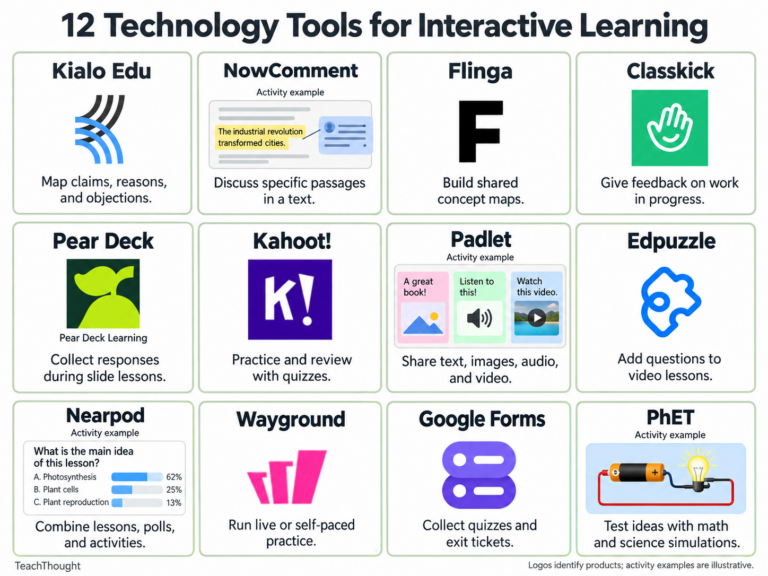
Technology Tools For Interactive Learning
Some of the more popular interactive learning tools include Kahoot!, Flip, Quizziz, and Nearpod, all designed to make learning interactive.
-
The 12 Best Education Apps For Android
While iOS remains the system of choice for most developers, learning with apps is as accessible on Android devices as it is on the iPad.
-
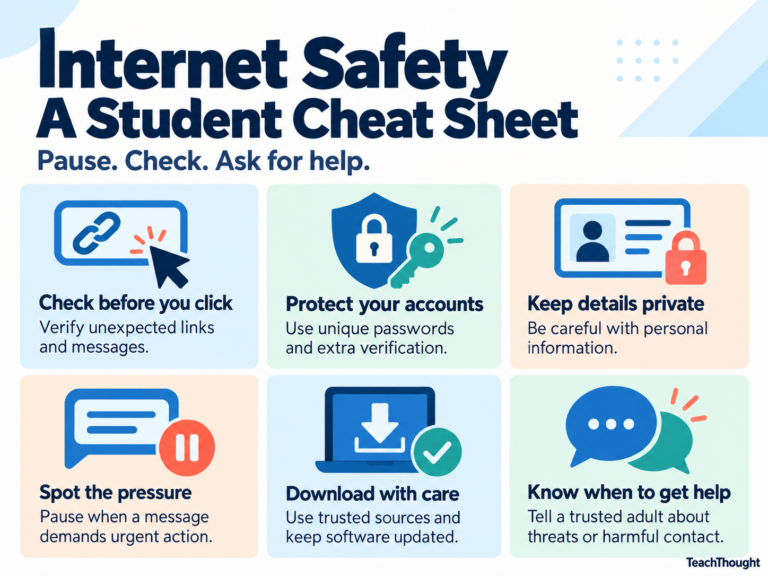
Digital Media Use In Schools: An Internet Safety Cheat Sheet
Internet safety is something many teachers-and worse, students-take for granted, and it doesn’t always begin with a clear threat.
-
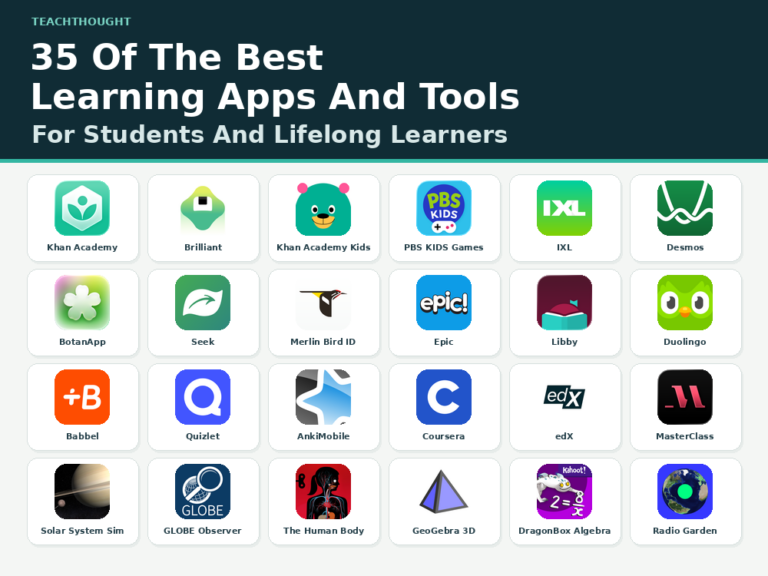
35 Of The Best Learning Apps For Students
Brilliant, IXL, Seesaw, Khan Academy, FlipGrid, and Marco Polo are just a few of the best learning apps for 2027.
-
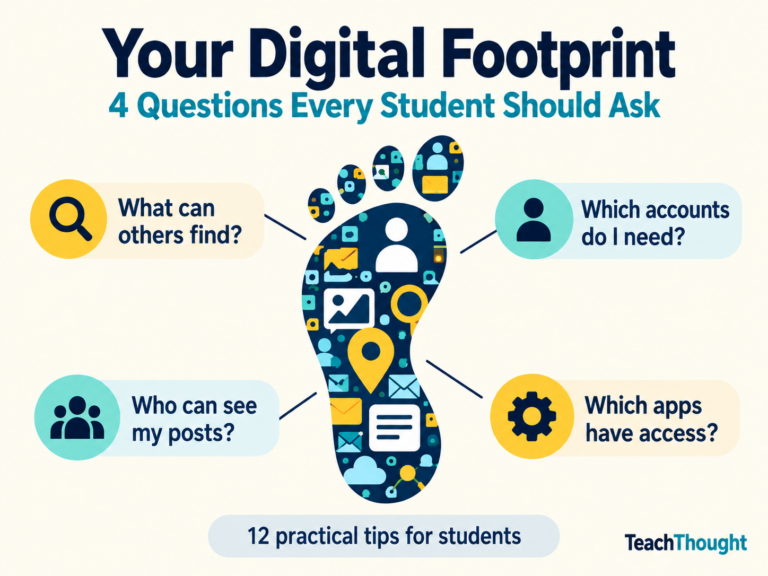
12 Tips For Students To Manage Their Digital Footprints
Helping students learn to manage their digital footprints starts with helping them understand how they’re vulnerable, then how to address it.
-
Wendell Berry And Preparing Students For ‘Good Work’
What is the effect of your work? Did you choose your work, or are you doing it under compulsion as the way to earn money?

TeachThought
Teaching resources and research-informed strategies for critical thinking, literacy, SEL, PBL, and education technology.
Critical Thinking
Frameworks, question stems, and resources for teaching and learning.
Assessment
Feedback, rubrics, and data-informed approaches to teaching and learning.
Learning Theories
Foundations of cognition, motivation, knowledge construction, and classroom design.
Project-Based Learning
Authentic projects that support inquiry, ownership, and deeper understanding.
Technology & AI
Purposeful, ethical integration of digital tools and emerging technologies.
Literacy
Reading, writing, vocabulary, and literacy strategies across content areas.

TeachThought is one of the most substantive educational organizations, consistently offering thought-provoking and practical ideas and resources.
By The Numbers
Teaching for Thinking
Research-Informed Teaching Strategies
Explore practical teaching strategies and classroom resources designed to help educators teach critical thinking while strengthening literacy, social-emotional learning, reasoning, and judgment across K–12 and postsecondary classrooms.