
Classroom Management Strategies
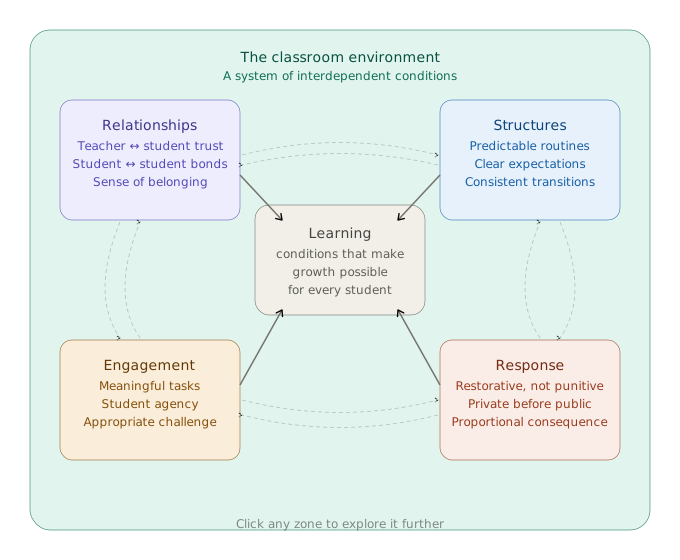
Classroom management strategies are the deliberate actions teachers use to organize learning conditions so students can participate productively. Effective management depends on how teachers build relationships, establish routines, design tasks, and respond to behavior in real time.
1. Relationship Building as a Classroom Management Strategy
Relationship building functions as a classroom management strategy because students are more likely to follow direction and remain engaged when they perceive the classroom as fair and predictable. Research has linked teacher-student relationships to improved behavioral and academic outcomes (Hamre & Pianta, 2001).
Strategies that develop this approach
Use targeted acknowledgment
Replace general praise with brief, specific feedback tied to effort or decision-making.
Build short, consistent interactions
Use transitions or independent work time for brief check-ins with individual students.
Structure participation to reduce social risk
Use partner or small-group structures before whole-class discussion.
2. Establishing Routines as a Classroom Management Strategy
Establishing routines reduces ambiguity and prevents repeated correction. Effective classrooms rely on explicitly taught procedures rather than assumed habits (Evertson & Emmer, 1982).
Strategies that develop this approach
Teach entry and start-of-task behavior
Begin each class with a consistent opening task.
Use visible cues for transitions
Post brief step sequences for common routines.
Re-teach routines when breakdown occurs
Pause and model again instead of repeating directions.
3. Task Design as a Classroom Management Strategy
Task design influences behavior. When work is unclear or mismatched in difficulty, students disengage or avoid participation. Adjusting task structure reduces these issues before they appear.
Strategies that develop this approach
Clarify what success looks like
Provide a model or example before students begin.
Adjust difficulty in real time
Modify complexity based on readiness.
Break complex work into steps
Segment longer tasks to support momentum.
4. Response to Behavior as a Classroom Management Strategy
Teacher response shapes classroom expectations. Clear, calm responses help students re-engage, while reactive responses often escalate behavior.
Strategies that develop this approach
Use brief, specific redirection
Focus on what the student should do next.
Shift correction to private space
Reduce public escalation by addressing behavior quietly.
Follow up after the moment
Reset expectations once the student is ready to re-engage.
Classroom Management Strategies by Grade Level
- Use visual schedules for daily routines
- Practice transitions with modeling and repetition
- Use call-and-response attention signals
- Provide immediate, specific feedback
- Use designated spaces for materials and movement
- Establish consistent entry tasks
- Use partner discussion before whole-class sharing
- Assign structured classroom roles
- Use timers to manage work intervals
- Reinforce routines through quick reteaching
- Use warm-ups to start class immediately
- Provide clear task models before independent work
- Use proximity before verbal correction
- Offer structured choice in assignments
- Use brief private conversations for redirection
- Use agenda-based lesson openings
- Set clear expectations for independent work time
- Use discussion protocols to manage participation
- Adjust task complexity based on readiness
- Follow up individually after behavior issues