Create A Curriculum That Questions The Purpose Of Knowledge
The purpose of curriculum is to provide a mutual language to organize and communicate knowledge–and students inherit its implications.

The purpose of curriculum is to provide a mutual language to organize and communicate knowledge–and students inherit its implications.
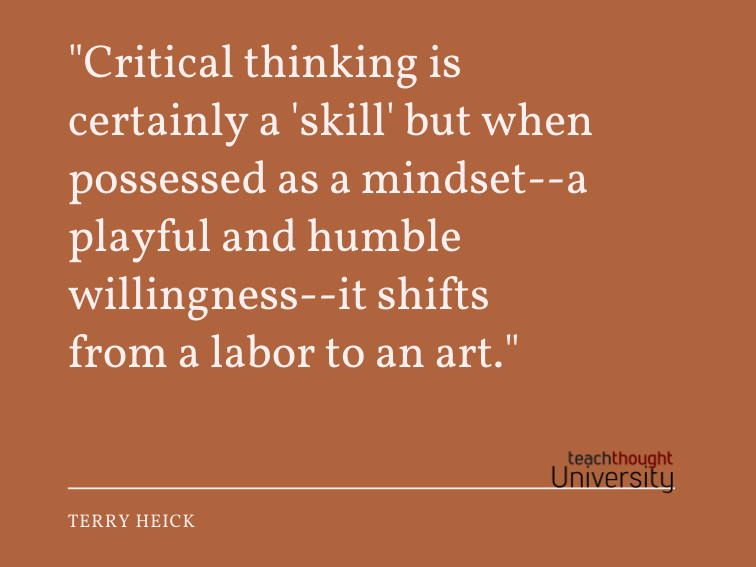
Critical thinking is certainly a ‘skill’ but when possessed as a mindset–a playful and humble willingness–it shifts from a labor to an art.
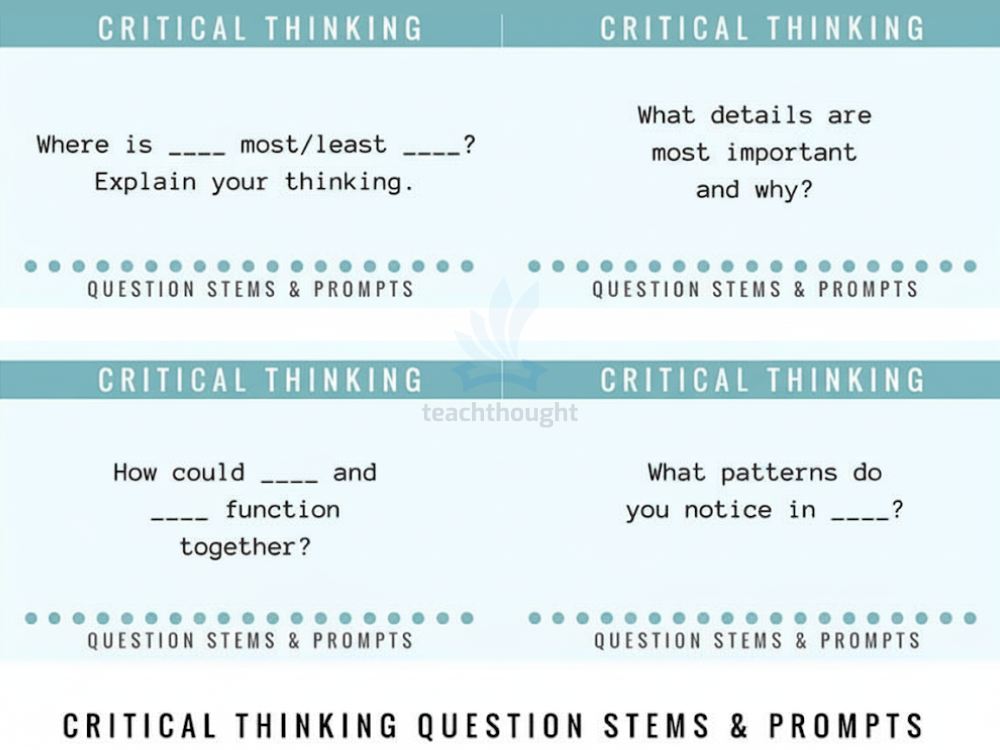
The purpose of these critical thinking question stems is to help students practice willingness to sit with an idea and struggle wonderfully.
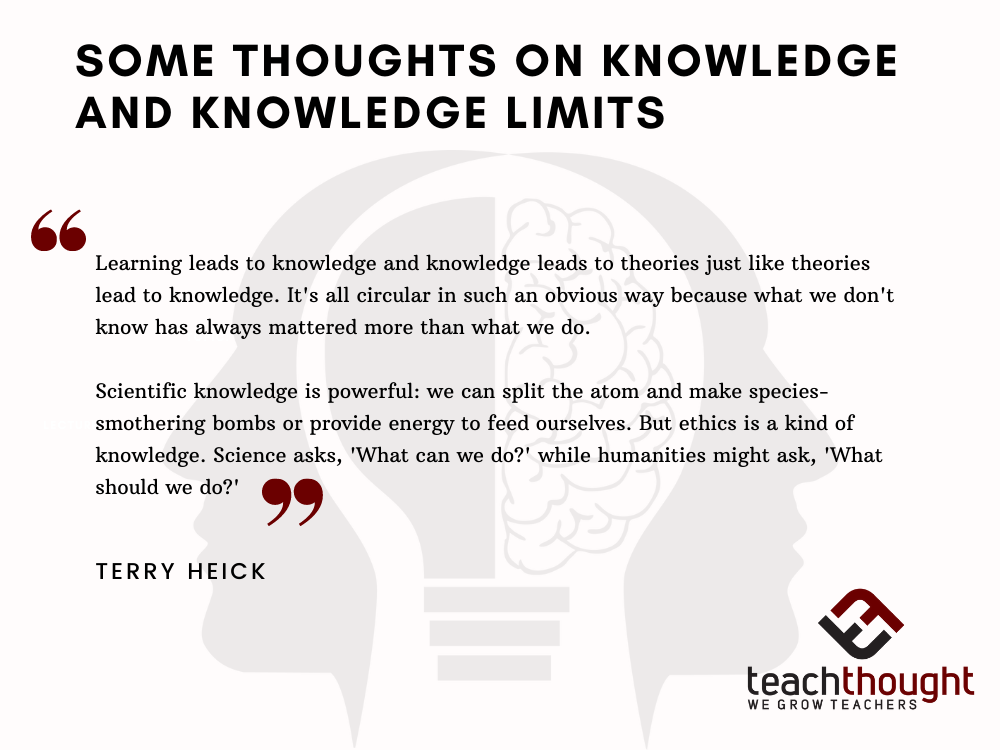
Learning leads to knowledge and knowledge leads to theories just like theories lead to knowledge. It’s all circular in such an obvious way.
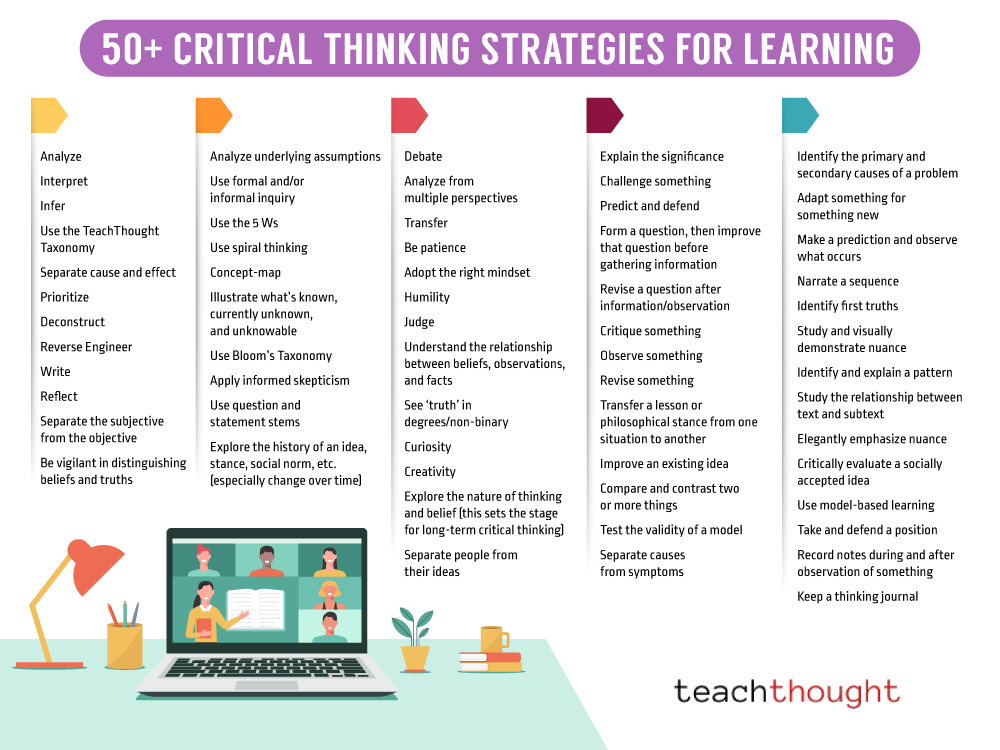
Critical thinking strategies often employ multiple data sources and perspectives in pursuit of understanding.
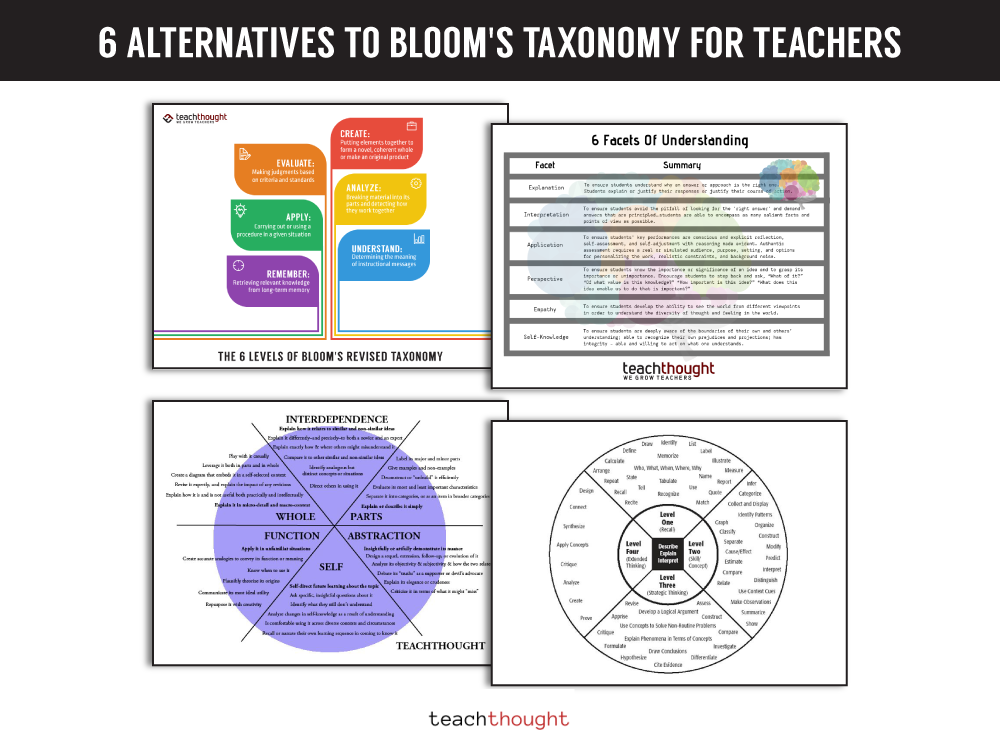
Why might you need alternatives to Bloom’s Taxonomy? While wonderful, it neglects important ideas that see the whole child.
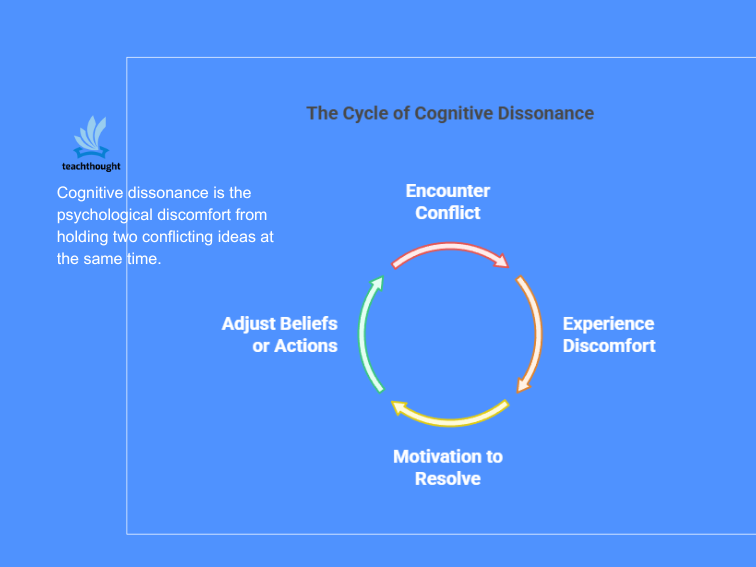
Cognitive dissonance is the psychological discomfort that arises when an individual encounters a conflict between what they believe and how they behave, or between two competing beliefs.
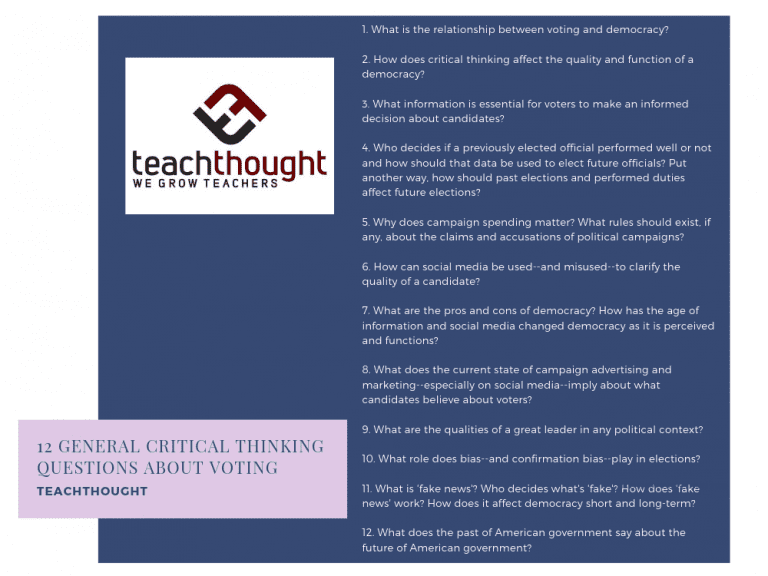
How can social media be used–and misused–to clarify the quality of a candidate?
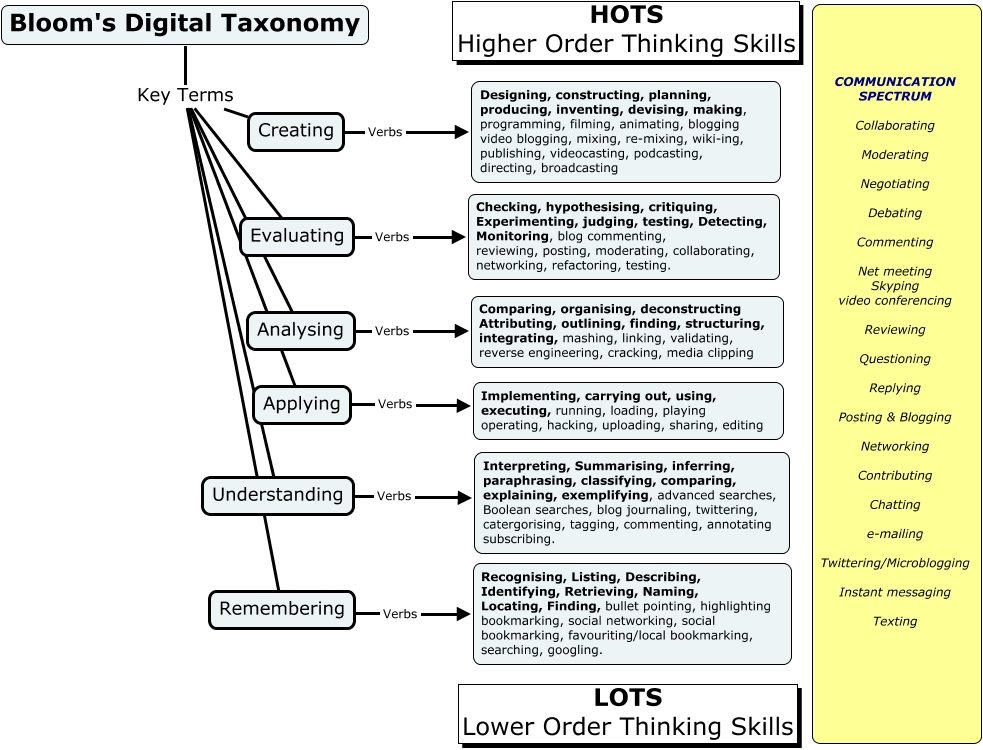
This Bloom’s Digital Taxonomy helps teachers evaluate and design digital tasks like ChatGPT use, blogging, podcasting, and more.
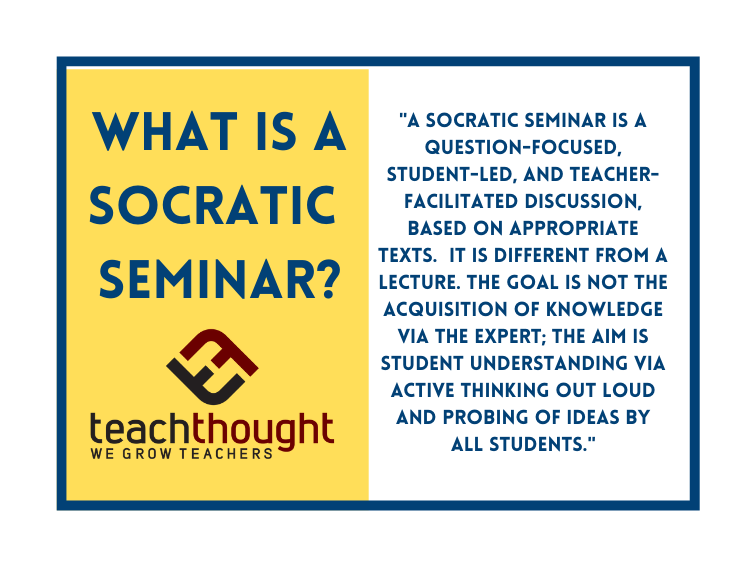
The goal of the Socratic seminar is to foster critical thinking by examining inaccurate/incomplete beliefs and the assumptions behind them.
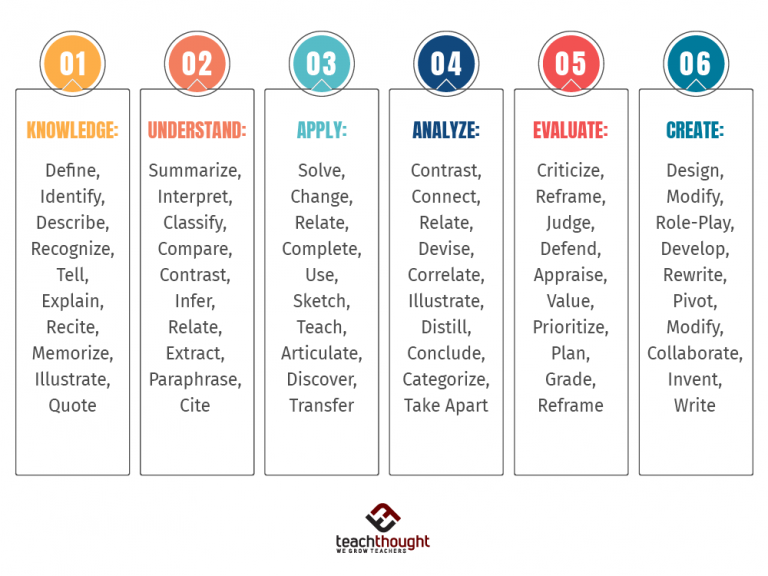
A comprehensive list of Bloom’s Taxonomy verbs, organized by cognitive level, to guide lesson planning, assessment design, and the development of critical thinking.
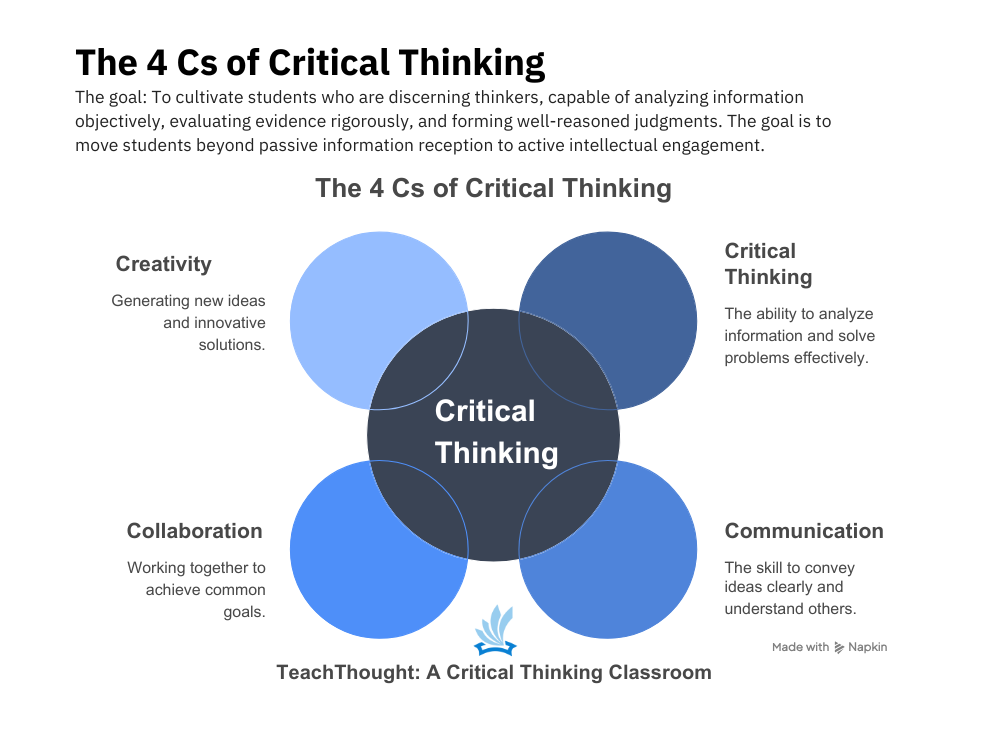
The 4 Cs of Critical Thinking: Critical Thinking, Communication. Collaboration, and Creativity.
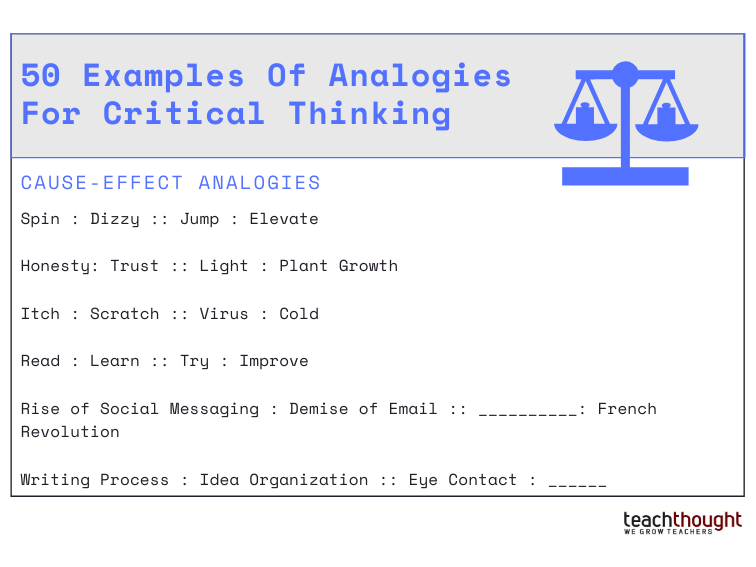
By forcing students to distill one relationship in order to understand another, it’s almost impossible to solve analogies without understanding.
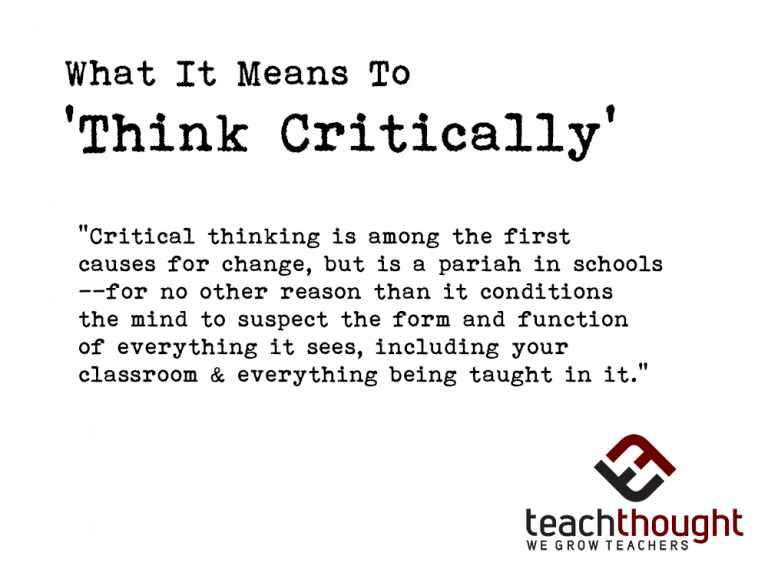
Critical thinking is the suspension of judgment while identifying biases and underlying assumptions in order to draw accurate conclusions.