
Educational Technology Integration: Essential Digital Tools for Both Assessment and Strategic Planning in K-12 Education
Education leaders want to help their students succeed, which is much easier with new software programs.
Demonstrating transparency while achieving district goals is possible without confusing multiplatform usage. Administrators interested in strategic planning and execution tools for K-12 school districts should compare their options to determine the ideal platform.
Criteria to Find the Best Planning Resources
Comparing the many digital tools available for education leaders may feel overwhelming. Simplify the process by looking for leading factors that help people make their districts better places to learn, such as:
- Flexible features to match each district’s unique goals
- Pricing structures designed for a variety of budgets
- Services beyond included software features, like ongoing technical support for busy administrators
Support teams are available to answer any questions superintendents may have while comparing software programs. They should feel confident about their decision before making a final purchase.
What Are the Best Tools for Automating Strategic Plan Reporting?
Streamlining districtwide initiatives is simple when education leaders have the latest software.
Those in leadership positions can experience an easier rollout by exploring the options
supporting strategic planning projects in districts nationwide.
1. AchieveIt
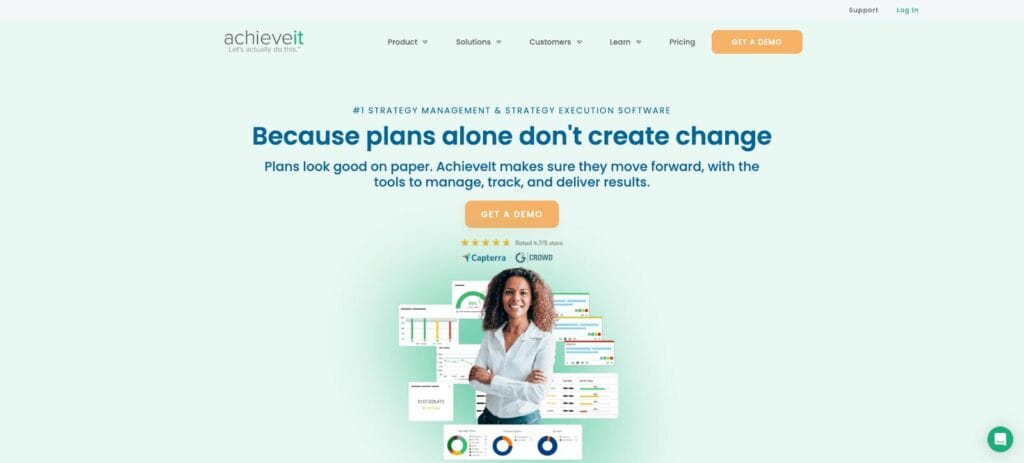
AchieveIt supports education teams trying to achieve multiple initiatives. The program unifies plans across districts, connecting their goals and strategies so everyone is on the same page. Authorized users can track student-focused metrics to gauge their results as well. Graduation rates and student retention are easy to compare on the user-friendly dashboards. AchieveIt also assists with compliance reporting, so accountability with parents and regulatory agencies takes less time.
Key features:
- AchieveIt supports unique district initiatives and different goals for each school.
- Users can create programs custom to their district’s achievement gaps, graduation rates and student resources.
- Compliance forms are easy with the program’s automated reporting for Title I, ESSA, and federal or state requirements.
| AchieveIt | ||
| Features | Pricing Structure | Included Services |
| Automated performance tracking Instant reporting for superintendents and boards Progress histories Communication tools with agencies, boards and communities Compliance and funding reporting | Three tiered packages available. Call for quotes | Remote training Ongoing support Monthly status calls Data migration Integrations |
2. LINQ

Administrators and district leaders use LINQ to support their education resource planning (ERP) efforts. The software combines HR, accounting, payroll and other operations into one platform. Authorized users can track school fund usage, work with vendors and manage performance monitoring reports for district employees. LINQ also keeps up with state and federal requirements, so districts do not have to pay for new software as the education industry changes.
Key features:
- Employees can access their personal documents in one location, so information supporting their employment is never locked away.
- Real-time data syncing ensures that everyone using LINQ can see what is happening across the district.
- Schools maintaining large storage units can track their assets from the LINQ dashboard.
| LINQ | ||
| Features | Pricing Structure | Included Services |
| Reporting and compliance Accounting and finance Purchasing HR and payrollWarehouse management | Contact for demo and pricing | Virtual assistant On-call support Assistance from implementation experts Built-in digital training resources |
3. EnrollWise
EnrollWise helps educators maintain compliance and handle enrollment more effectively. The program offers dynamic reporting tools to monitor annual enrollment progress and track trends across the district. If policies change, the responsive platform adjusts its rules so all involved teams remain in compliance. Regulatory readiness is simple with EnrollWise documentation and data-driven reports.
Key features:
- Audit trails ensure transparency whenever users need to double-check logs or pull compliance reports.
- District activity across schools and geographies is easy to see with enrollment trend tools.
- Student information system (SIS) integration happens quickly to reduce reporting gaps and avoid overcomplicating administrative oversight responsibilities.
| EnrollWise | ||
| Features | Pricing Structure | Included Services |
| Policy enrollment and adaptation tools School directory management Event scheduling Documentation management Built-in messaging | Contact for demo and pricing | User support for staff and parents |
4. Envisio

School leaders seeking end-to-end management software should consider Envisio. Performance management and strategy execution are easy with the platform’s built-in tools. District leaders use Envisio to outline their priorities, analyze their budget and review their progress with benchmarking data. Public sector specialists appreciate that organizational improvement is possible within one digital location.
Key features:
- Integrations feel effortless because Envisio works in tandem with commonly used public sector tools.
- The platform’s open API allows users to create native integrations for their current workflows.
- Community dashboards showcase the district’s progress so everyone involved in the school system understands what is happening.
| Envisio | ||
| Features | Pricing Structure | Included Services |
| Organization plan creation tools Project management resources Centralized performance data Community dashboards Budget monitoring | Two tiered packages available Call for quotes | Unlimited projects and authorized users Single sign-on and setup Unlimited plans Team training |
5. Beacon

Beacon is among the best strategic planning and execution tools for K-12 school districts. Administrators use it to create and build plans that span multiple schools. Real-time progress tracking is possible with status updates provided by all involved parties. Schools can work on individual goals and measure their impact with customizable reports drawn from user-friendly dashboards.
Key features:
- Collaboration tools keep conversations flowing between the community, teachers, school board members and staff.
- Checkpoints ensure that all stakeholders understand what they need to do next to achieve their goals.
- Unlimited plans are available for districts ready to tackle large-scale growth projects.
| Beacon | ||
| Features | Pricing Structure | Included Services |
| Strategy maps Ecological assessments Calendar syncing Real-time transparency tracking Custom reporting | Contact for demo and pricing | Contact for more information |
What Are Strategic Planning and Execution Tools for K-12 School Districts?
Strategic planning and execution tools for K-12 school districts are software programs that help educators achieve long-term goals and solve current challenges. The programs simplify strategic planning by outlining key priorities and goals. They also assist with tracking progress, communicating with involved stakeholders and generating reports for reviews. Some platforms even include parents with surveys and community dashboards, depending on the selected product.
Benefits of Implementing Planning Software
Getting used to one of the best tools for automating strategic plan reporting is a minor adjustment with long-term gains. Education teams may reap numerous benefits from incorporating technologies into their daily resources.
Better Accountability With Community Members
Educational platforms with public dashboards or survey options make parents feel more involved. They can easily see what the school district is doing and what their child will experience there. Additional transparency and accountability could bring people together by showing them what kind of education their children are receiving.
Improved District Alignment
Planning tools bring people together. They consolidate detailed plans and long-term goals so everyone in a district has a central information hub. The streamlined collaboration could reduce the chance of miscommunication that might hinder teams from achieving their goals. Data shows that 36% of schools experience insufficient communications staffing, but they could get important information to involved parties more effectively with new digital tools.
Increased Operational Efficiency
Communicating between schools can waste time. If administrative staff members log onto the same platform to input data or compile reports, they will become more efficient at their daily responsibilities. Automated software saves time. Educators can focus on their students while the district pursues strategies that benefit everyone.
Implementation Tips
Adding the best tools for automating strategic plan reporting into existing operations can be simple. Education leaders should create a plan to use a new platform without complicating everyone’s daily responsibilities.
Schedule Training Sessions
People leading a software implementation project should schedule training time for all school members who need to use it. Teachers and education professionals who understand how to utilize new software effectively will save time and avoid errors resulting from accidental feature misuse.
Roll Out Slowly
Pew Research found that 68% of teachers feel overwhelmed by their jobs. If they find out they have to start using a new software program overnight, they may become frustrated with the sudden change. District leaders should plan a phased rollout so everyone slowly builds their confidence in the new system. Parents will also appreciate having time to get used to their community dashboard if it is an included feature.
Get Regular Feedback
Giving someone a tool is one step in improving workflow. Superintendents should also receive regular feedback from users of their selected software. If confusion is widespread, administrators can work to resolve the issue and prevent frustration. Repeated challenges will also provide opportunities to reflect on whether the district has chosen the best software for each school’s needs.
Improve the School Year With New Technology
Strategic planning and execution tools for K-12 school districts are beneficial for education leaders, parents and students. Experts seeking a new platform should compare their options and plan how they will introduce the software. Access to better reporting and communication tools could help districts achieve their long-term goals.