Creating A Different Kind Of ‘Gang’ To Reach Students
More authentic and diverse in-school social groups can engage challenging, hard-to-reach students in powerful ways.

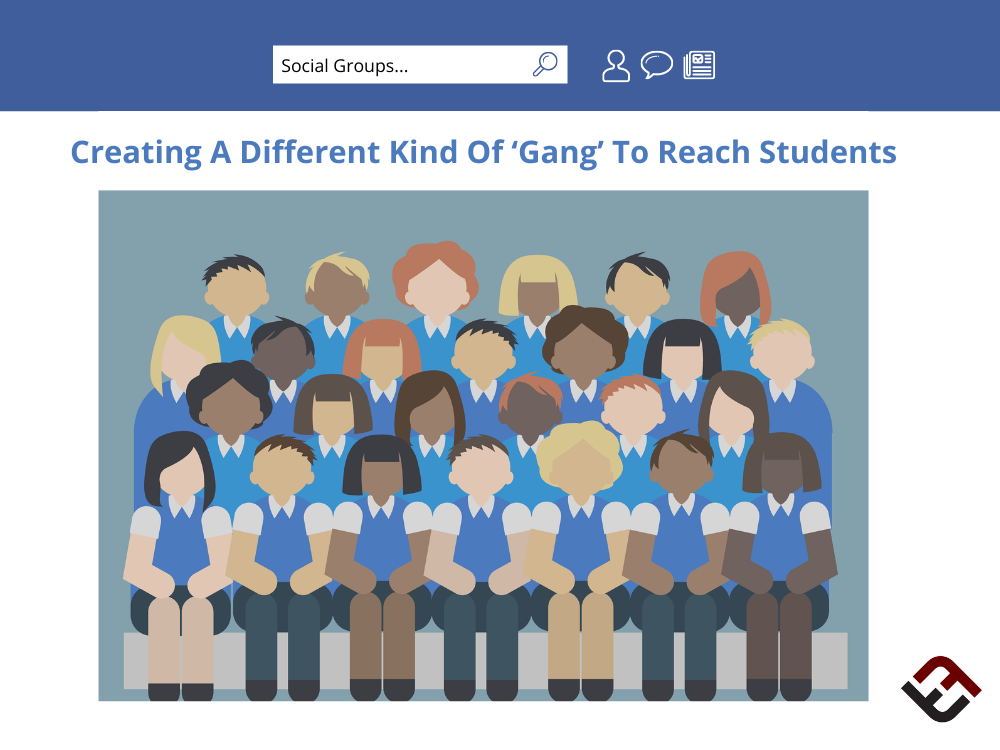
More authentic and diverse in-school social groups can engage challenging, hard-to-reach students in powerful ways.
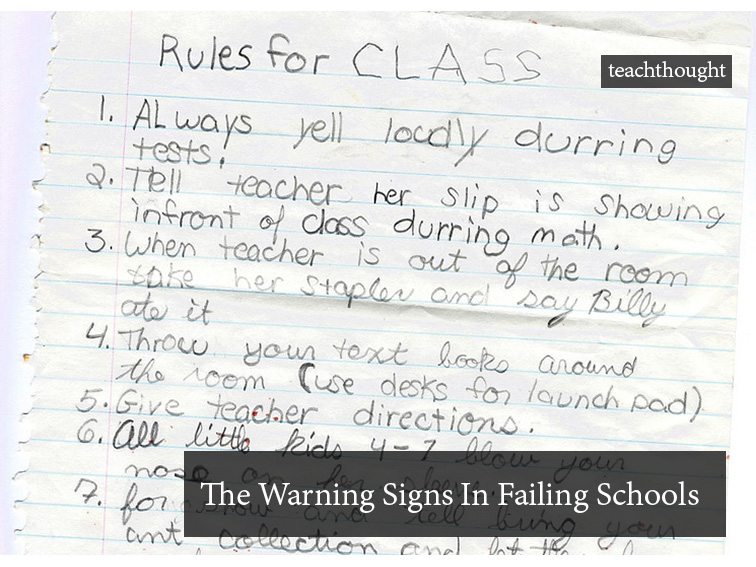
From low expectations to a lack of student engagement, the warning signs of a failing school aren’t difficult to discern.
When it comes to supporting a student’s progress, showing them what they can do to improve or perform better is the key.
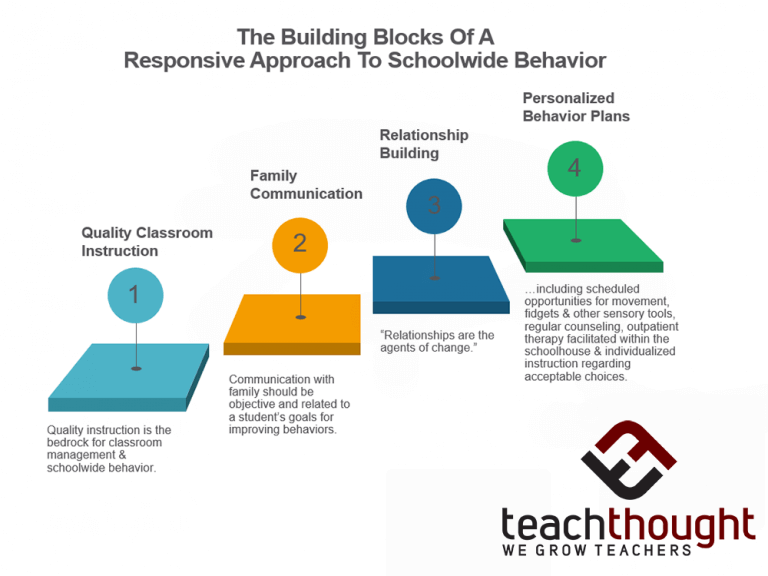
The building blocks of a schoolwide behavior program are quality instruction, communication, relationships, & personalized behavior plans.
From getting feedback from field experts to using project-based learning, here are 12 ideas to make learning more like the ‘real world.’
Teachers are professionals and their ‘clients’ are children and their function is teaching and their craft is understanding.
Social-emotional learning is part of the bedrock of critical literacy: helping them care enough to change themselves.
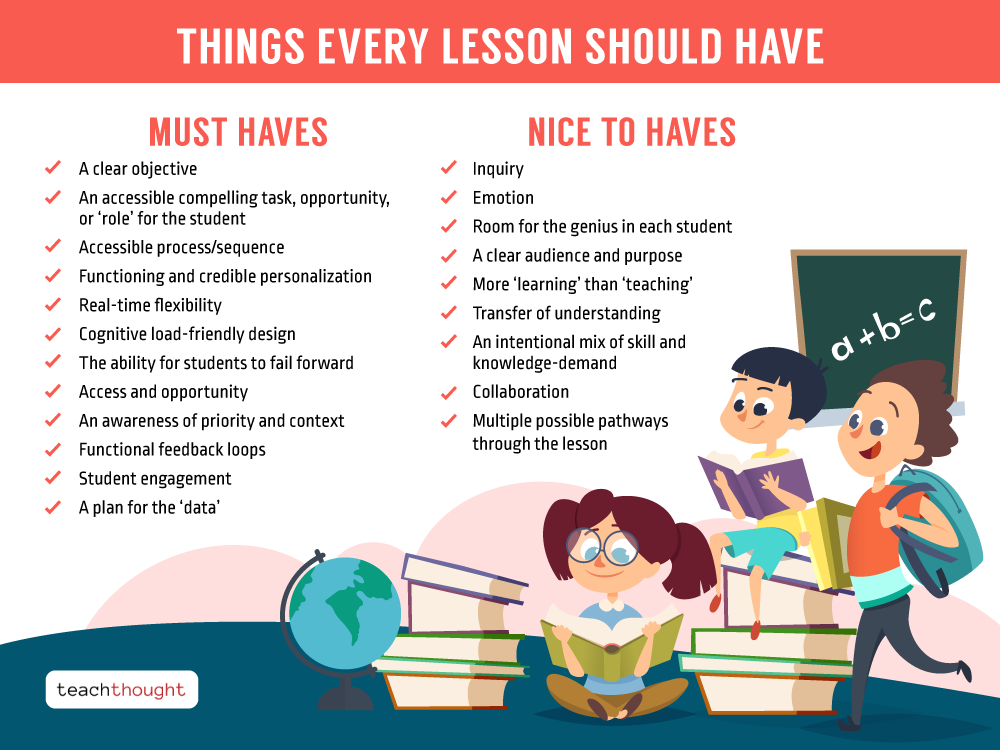
Every lesson plan should have a clear and compelling–and accessible–role for each student during each moment of the lesson.
Yes, taking action will probably make you anxious but child abuse is preventable. Here are some tips and resources for teachers.
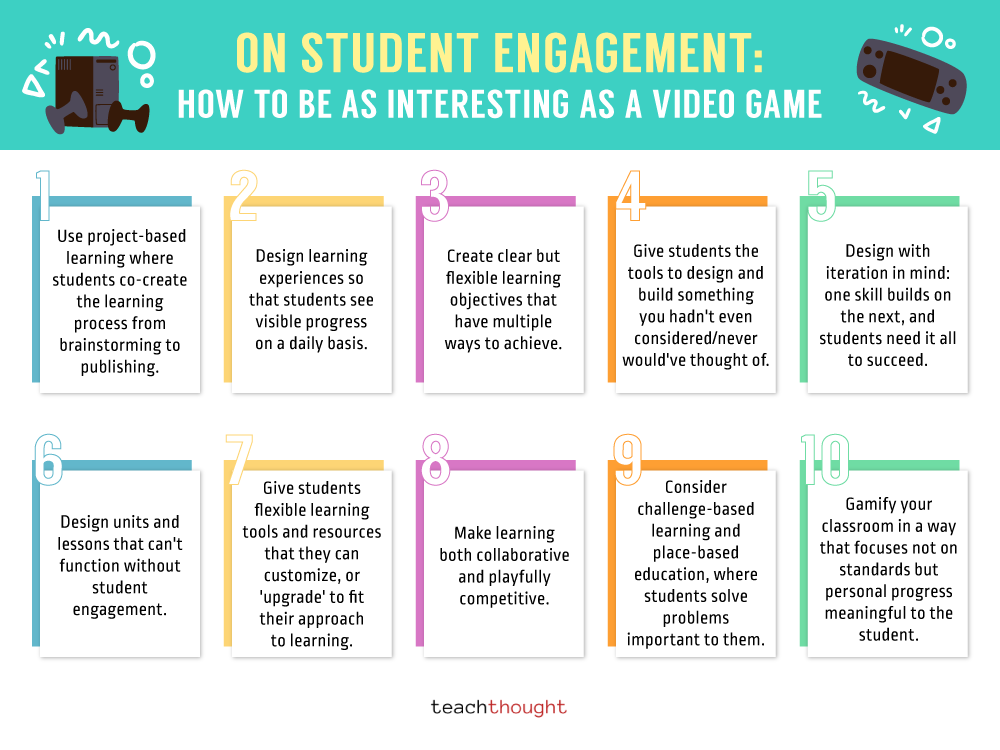
One student engagement strategy is to offer diverse pathways through content–pathways students would have to ‘unlock’ to progress.
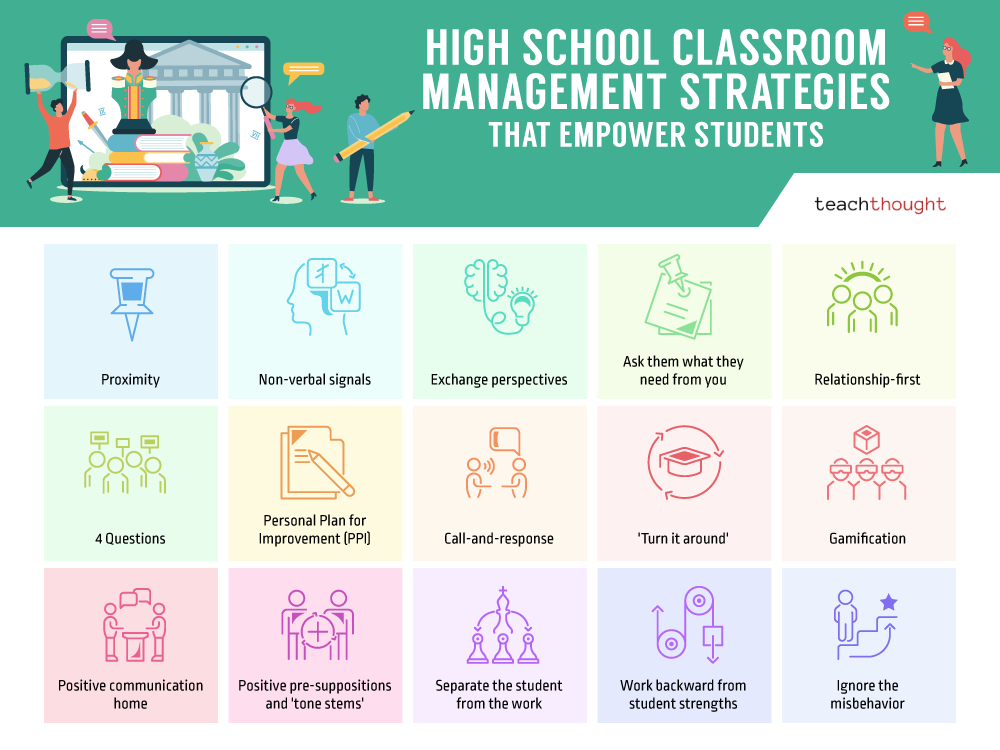
These high school classroom management strategies stem from the belief that students respond well to positive reinforcement.
I learned that my classroom wasn’t *my* classroom. Rather, it was a learning space for children. The classroom belonged to them.
Here are 22 simple assessment strategies and tips to help you become more frequent in your teaching, planning, and curriculum design.
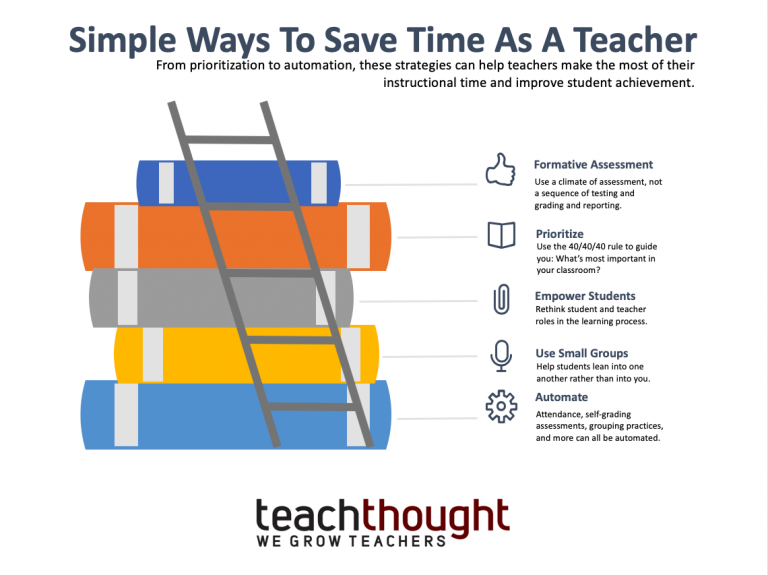
Implementing the instructional process of formative assessment can actually maximize learning and help teachers save time in the classroom.