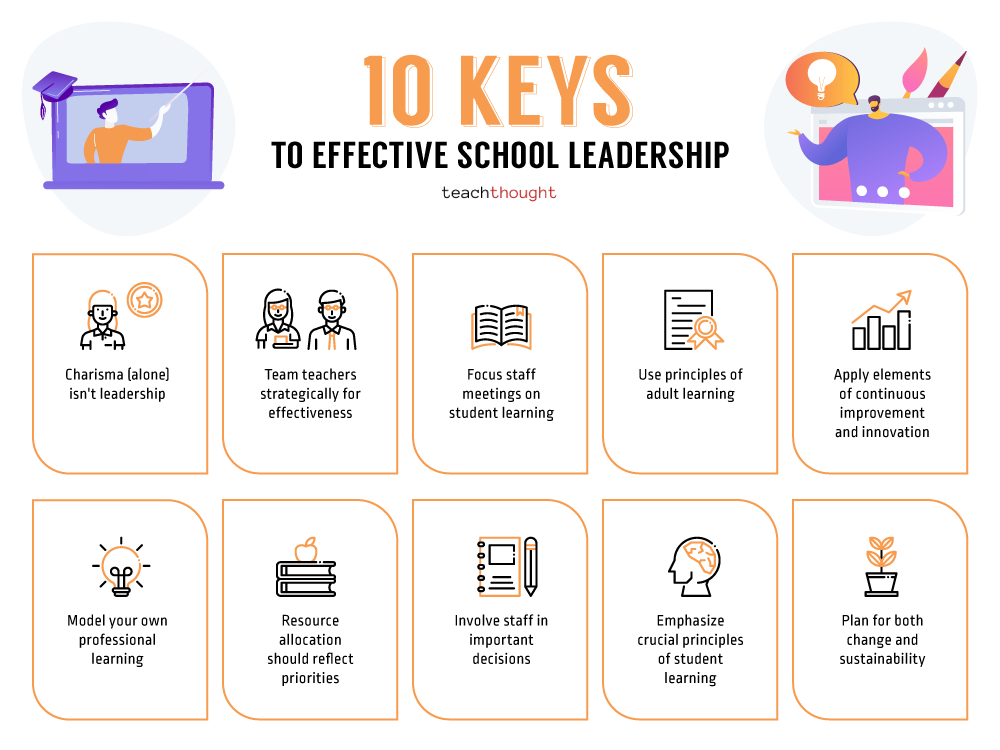
10 Research-Based Keys To Effective School Leadership
From emphasizing adult learning to teaming teachers, here are 10 research-based strategies for effective school leadership.
Here are 22 simple assessment strategies and tips to help you become more frequent in your teaching, planning, and curriculum design.
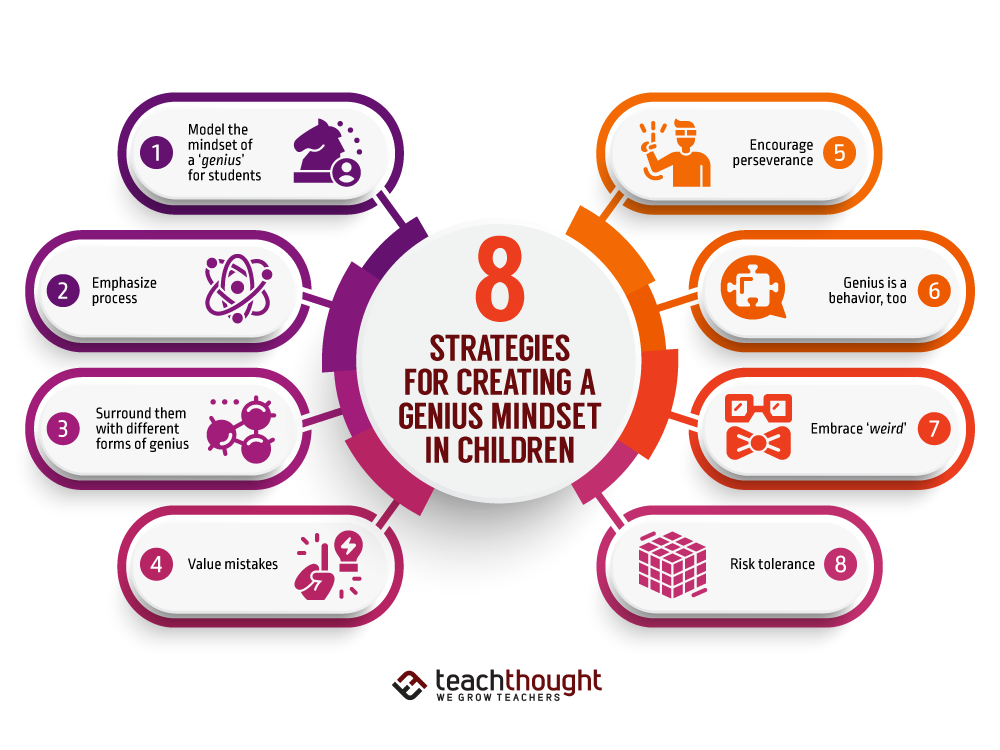
Genius requires one to reject convention in pursuit of something special through a mix of intelligence, creativity, mindset, and perseverance.Â
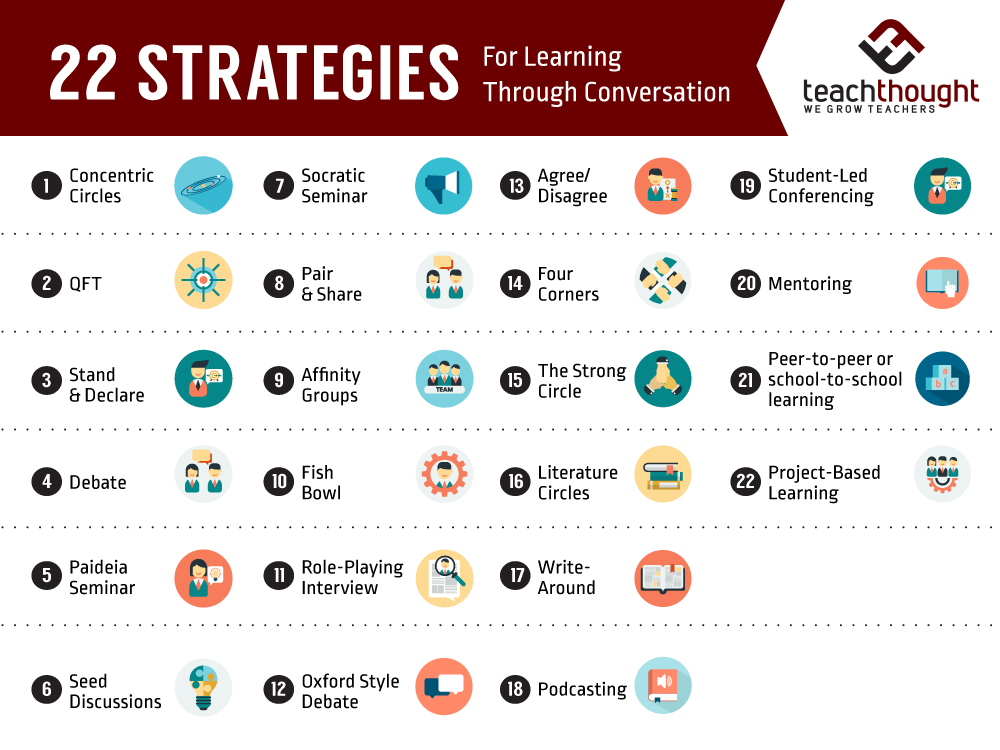
In addition to talking to each other in these strategies for learning through conversation, students talk to ideas–and the ideas talk back.
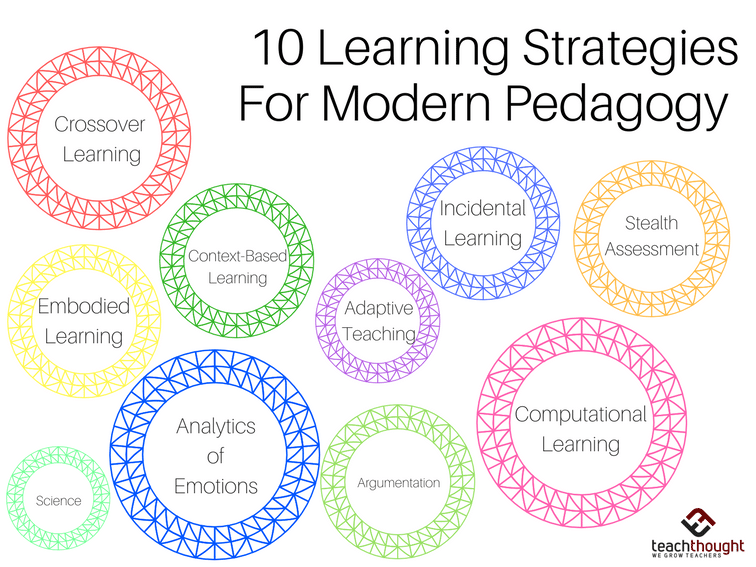
Learning strategies for modern pedagogy include crossover learning, computational thinking, and learning through argumentation.
Here are 5 specific and practical strategies, along with associated tools, that promote deep learning in virtual and physical classrooms.
A choice board is a simple personalized learning tool that provides scaffolding, tiering, use of Bloom’s, multiple learning styles, and more.
The development of beliefs based on critical reasoning and quality data is much closer to a science-based approach to critical thinking.
Curiosity is a powerful catalyst for learning and using inquiry-based learning can leverage potential. Here are 6 strategies for your classroom.
Rethinking grading in project-based learning can support students by clarifying complexity and rewarding nuance of understanding.
Learning science is a dynamic, spiraling, evolving, inherently playful process that promotes creativity and critical thinking.
Student-centered teaching is teaching designed for the student. Done well, it can disarm some of the more intimidating parts of academia.