Stop Saying Learning Styles Don’t Work
Somehow, the idea that one student learns best by listening and another while doing jumping jacks has come to define learning styles.

Somehow, the idea that one student learns best by listening and another while doing jumping jacks has come to define learning styles.
The power of the classroom resume is that it motivates students to prospect for talents and experiences among their peers.

We believe there is real value & necessity for certain knowledge & want learners to learn & use it in multiple ways & for multiple reasons.

These spreadsheets for teachers include spreadsheets to calculate grades, spreadsheets to track attendance, a class schedule, and more.

Whether a formal test or an informal observation, the most important question every assessment should answer is, ‘What now?’

Here are 31 haunted houses, buildings, forests, and generally creepy places you can explore with Google Maps.
The following infographic by Open Colleges highlights 30 possible ways in which Google Glass might eventually be used in educational settings.

Here, Dr. Murray Hunter has offered eight types of imagination we use on a daily basis, from constructive to empathic and dreaming.

Storytelling is one of the best ways to communicate to someone. Here are 30 storytelling tips for teachers to better reach their students.

Adding Materials To An Assignment In Google Classroom by TeachThought Staff Adding materials to assignments in Google Classroom is simple–basically navigating to the Assignments page, clicking the paperclip icon, then choosing the source of the file from the dropdown menu. For slightly more delineated step-by-step instructions on how to add materials to an assignment in…

Bloom’s Taxonomy is a powerful teaching and learning tool that can help you shape nearly everything that happens in your classroom.

When a task feels overwhelming, the ‘I can,’ quickly falls apart. Teach students how to break down a big project into miniature steps.
Families and communities often only recognize the bits and pieces of education they’ve seen before–letter grades, essays, book reports, and report cards.
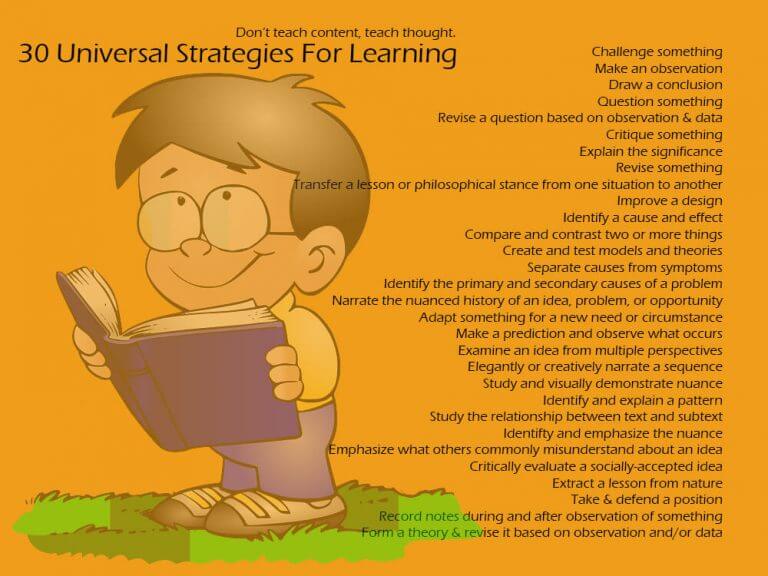
From making an observation and drawing a conclusion to forming and improving a question, here are 27 strategies for critical learning.