Why Social Interaction Is Essential To Learning Math
We seek fluency in the language of math but don’t encourage students to use it in a social way, producing many who are anxious about math.


We seek fluency in the language of math but don’t encourage students to use it in a social way, producing many who are anxious about math.

How To Create A Climate Of Possibility In Your Classroom by TeachThought Staff In May of last year, Ken Robinson–he of “Is School Killing Creativity?”/TED Talk legend status–gave a brief talk on the idea of contrast, specifically the difference between who we are and how we teach. His general message was that we, as human…

As we think about how reading habits change & how to support students in print & digital spaces, I hope you’ll model reading practices.

You don’t have to be a neuroscientist to promote brain-based learning in your classroom. In fact, it’s really quite simple.

Write about something in your life that feels uncertain right now. You don’t have to solve it—just describe what the uncertainty feels like.

This (simple) game helps students understand how fake news works, why it becomes popular, and its central mechanics and trends.
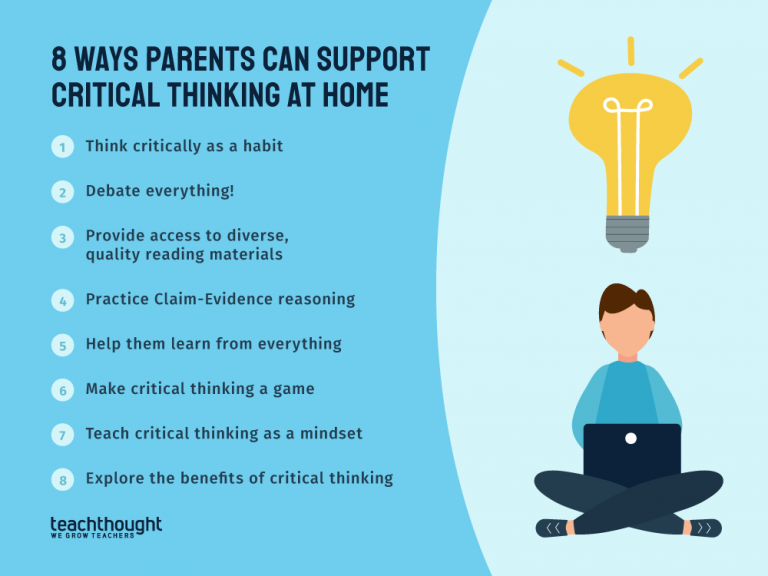
Practicing critical thinking at home–in their ‘native environment’–is a useful strategy to build their cognitive muscles.

In a highly effective learning environment, there are opportunities for students to revisit old thinking while grappling with new ideas.

From content to thought, linear learning to spiral learning, and grading to micrograding, here are possible characteristics of an innovative classroom.

For me, my biggest takeaway from college was learning what I didn’t know.

Explore how teachers use AI as a true instructional partner—improving differentiation, feedback, assessment, workload reduction and student engagement through real, proven classroom scenarios.

A printable PDF with 40+ practice sets in relationship types: Synonym, Antonym, Part-to-Whole, Cause–Effect, and Function.

Everything around us is some kind of pattern and we look for them. That’s how minds work. Learning requires us to disrupt those patterns.
The need to be rational collides with the enormous complexity and scale of the circumstances teachers face.