10 Statements To Help Students Understand Wisdom
Wisdom is knowing what’s worth understanding, understanding the value of ideas, and always placing knowing in the context of not knowing
Wisdom is knowing what’s worth understanding, understanding the value of ideas, and always placing knowing in the context of not knowing
Here are 13 digital research lessons for the student who has grown up in an age of information abundance, but contextual scarcity.
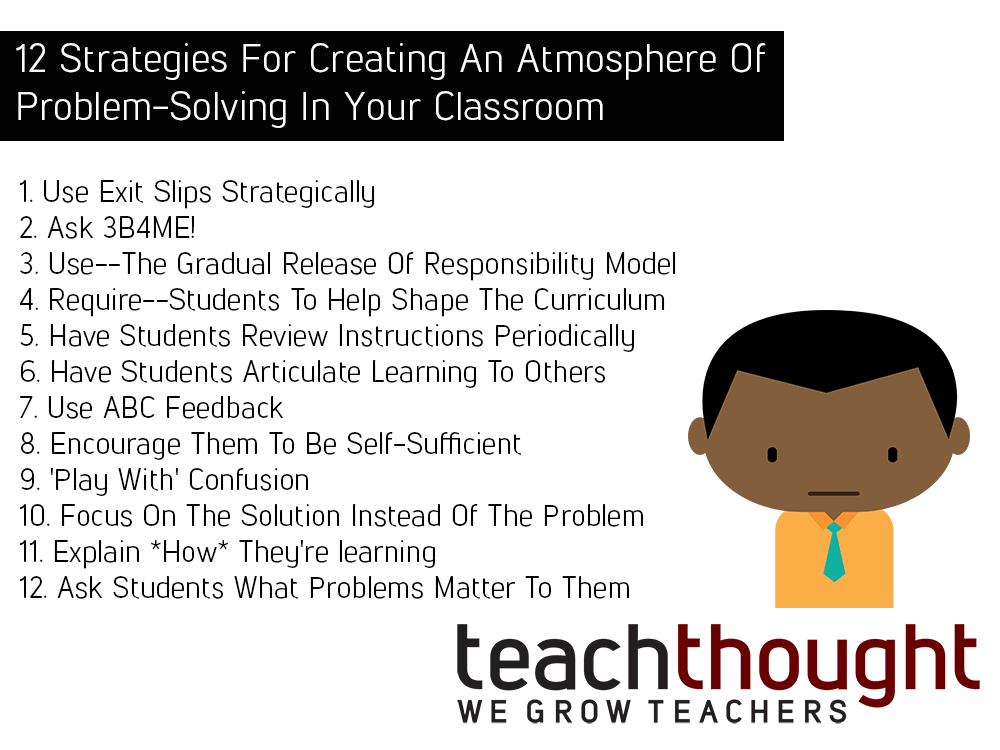
Problem-solving and critical thinking are both skills and habits that allow students to apply and transfer academic knowledge into the real-world.
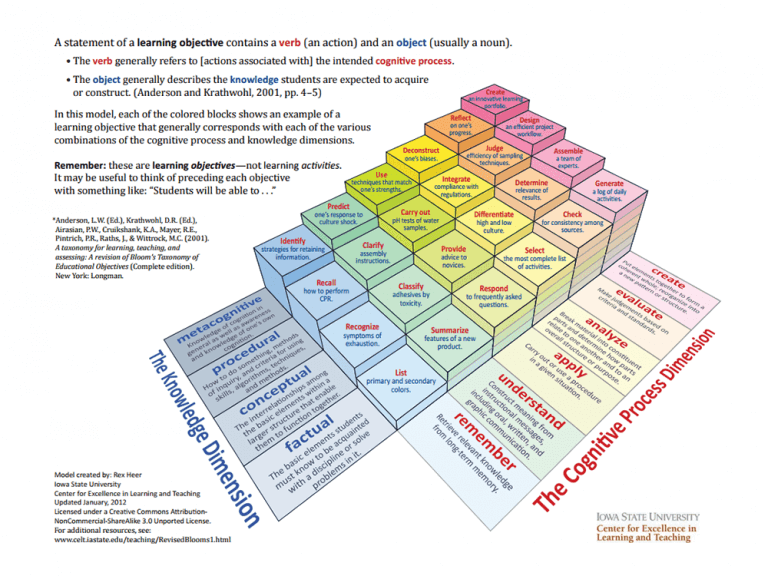
Each colored block has an example of a learning objective corresponding with each combination of the cognitive process and knowledge dimensions.
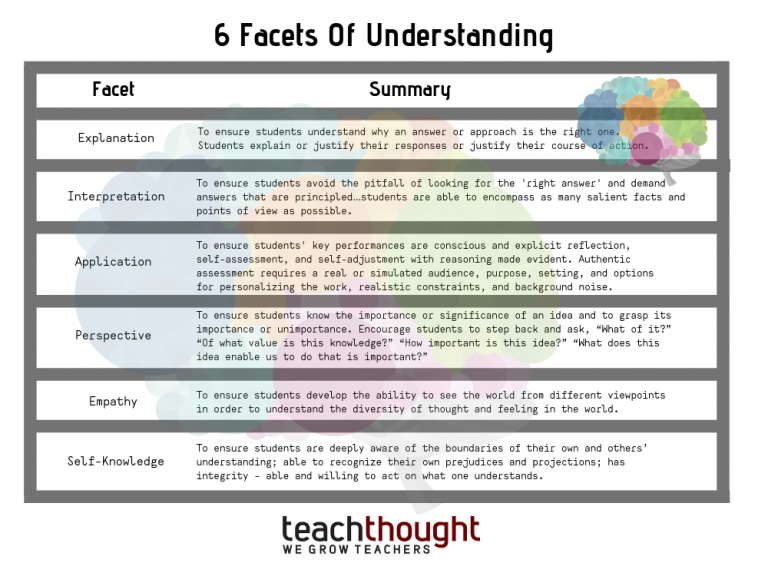
The 6 Facets of Understanding is a non-hierarchical framework for understanding. These ‘facets’ are useful as indicators of understanding.
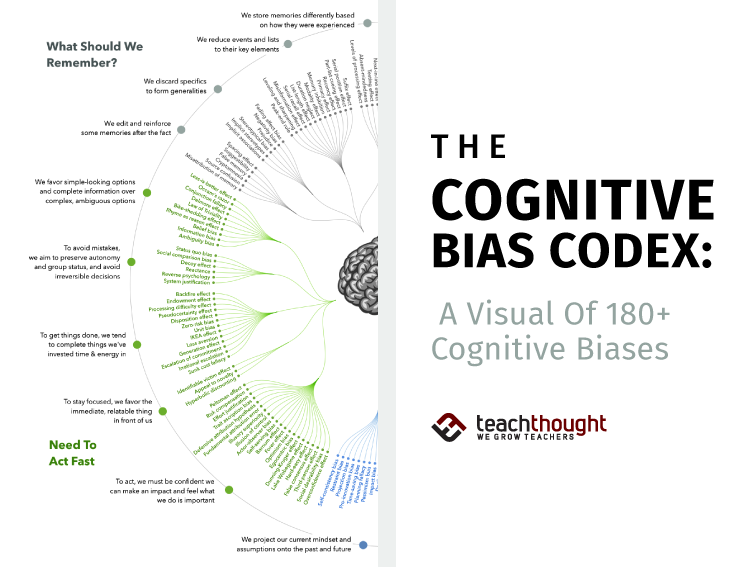
Cognitive biases are tendencies to selectively search for or interpret data in a way that confirms one’s existing beliefs.
MECE is a framework that allows you to organize data to ensure that all data is analyzed to ensure all possibilities are exhausted.
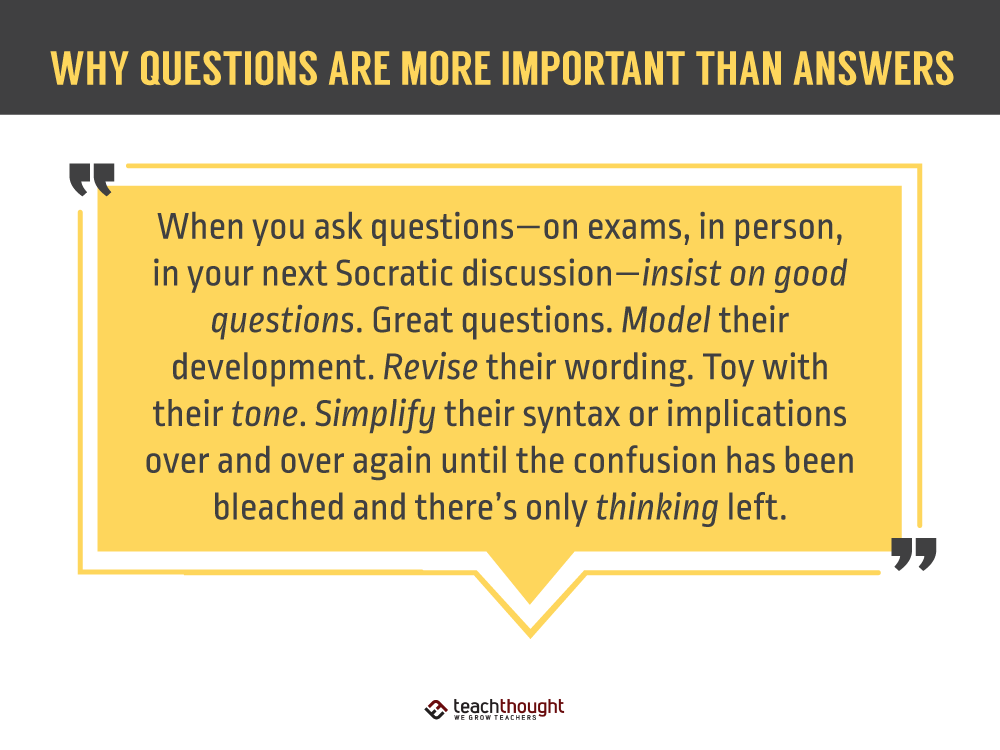
Why are questions more important than answers? Because answers stop learning while questions start it, contextualizing what we don’t know.
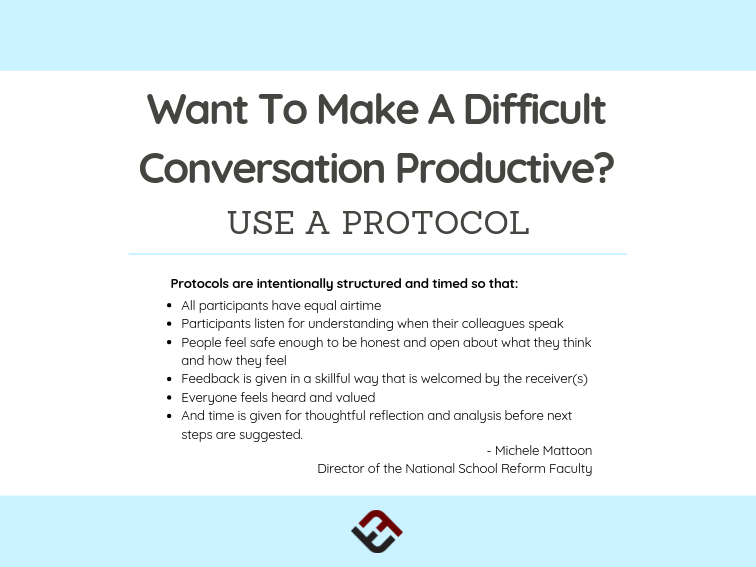
Ideally, before difficult conversations, all parties would commit to following a third party-developed protocol to achieve the best outcome.
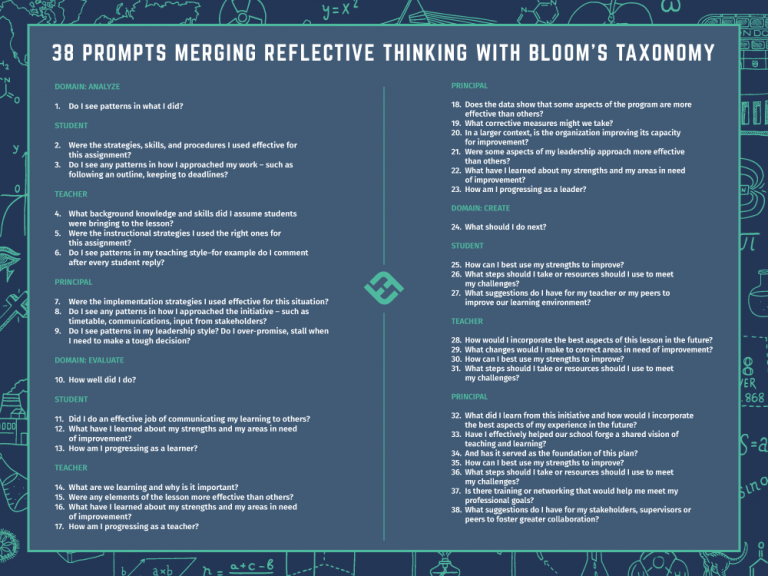
We developed a taxonomy to provide a schema of prompts that could be used by students and teachers to hone their reflective thinking skills.
From rubrics and presentations to apps, definitions, and frameworks, here are 25 of the best resources for critical thinking.
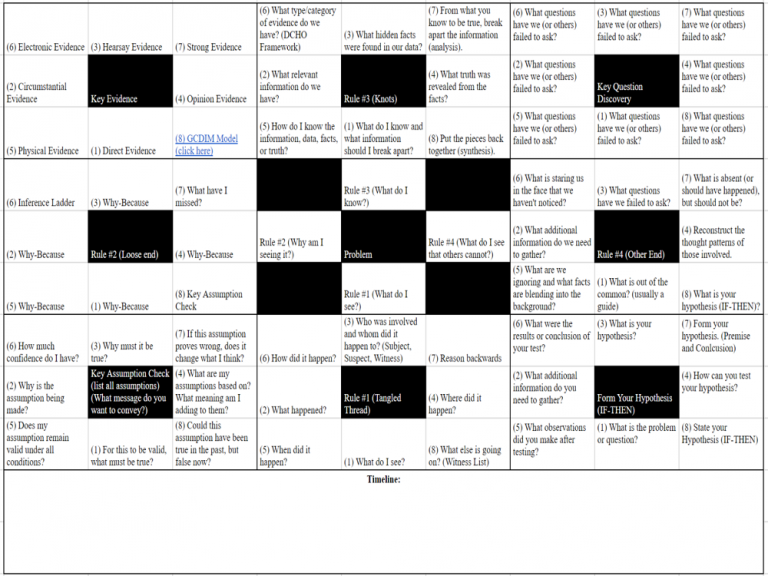
Like the rules underlying complexity found in swarm intelligence, Swarm Problem Solving possesses simple rules useful for unpacking problems.
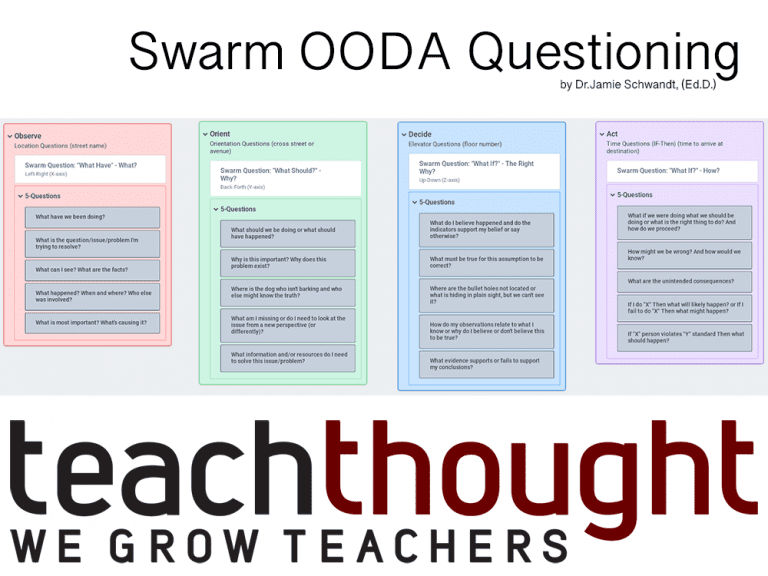
What is Four-Dimensional questioning? The way you ask a question yields different results and can lead you in different directions.
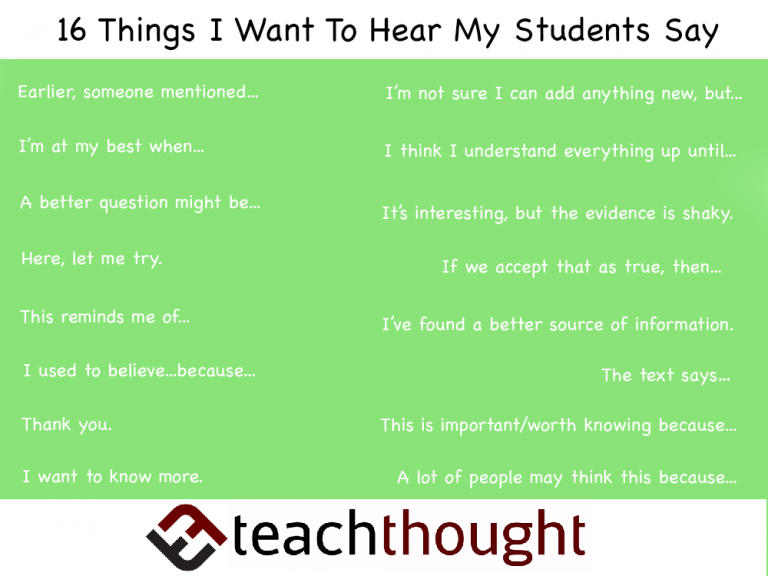
“Ohhh, I get it.” The iconic phrase that teachers value hearing. A sign you’ve moved a student. Something you want to hear your students say.