24 Things A Teacher Should Never Ask A Student To Do
There are certain things a teacher should never ask a student to do, like lying, being what they’re not, and making promises they can’t keep.

There are certain things a teacher should never ask a student to do, like lying, being what they’re not, and making promises they can’t keep.
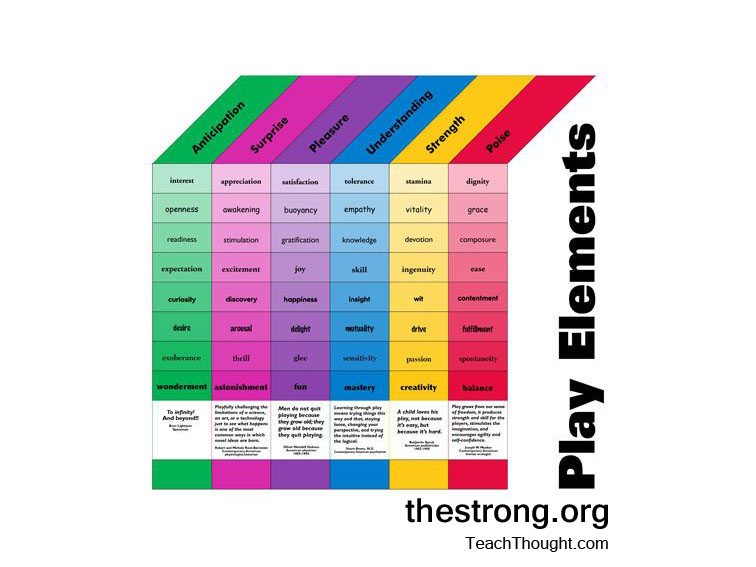
6 Elements Of Play: The Spectrum Of A Relaxed Mind by TeachThought Staff The role of play in learning is a complex thing, in part because it is easily misunderstood as ‘playing is learning.’ While that’s certainly true, there is also a role for play in formal learning experiences as well. As self-directed learning becomes more…

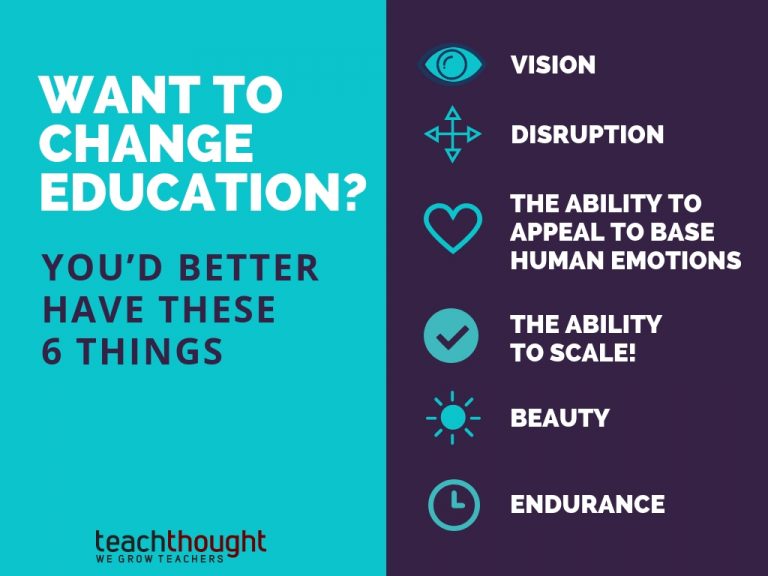
You Need These 6 Things To Change Education by Terry Heick Every afternoon, after failing to take a nap because I make everything harder than it has to be, I pout down to Starbucks for coffee and a book. Today a teacher I used to work with walked by, and we caught up for a…
If you can show all assessment results, learners may realize that understanding is evasive, evolving, and as dynamic as their imaginations.

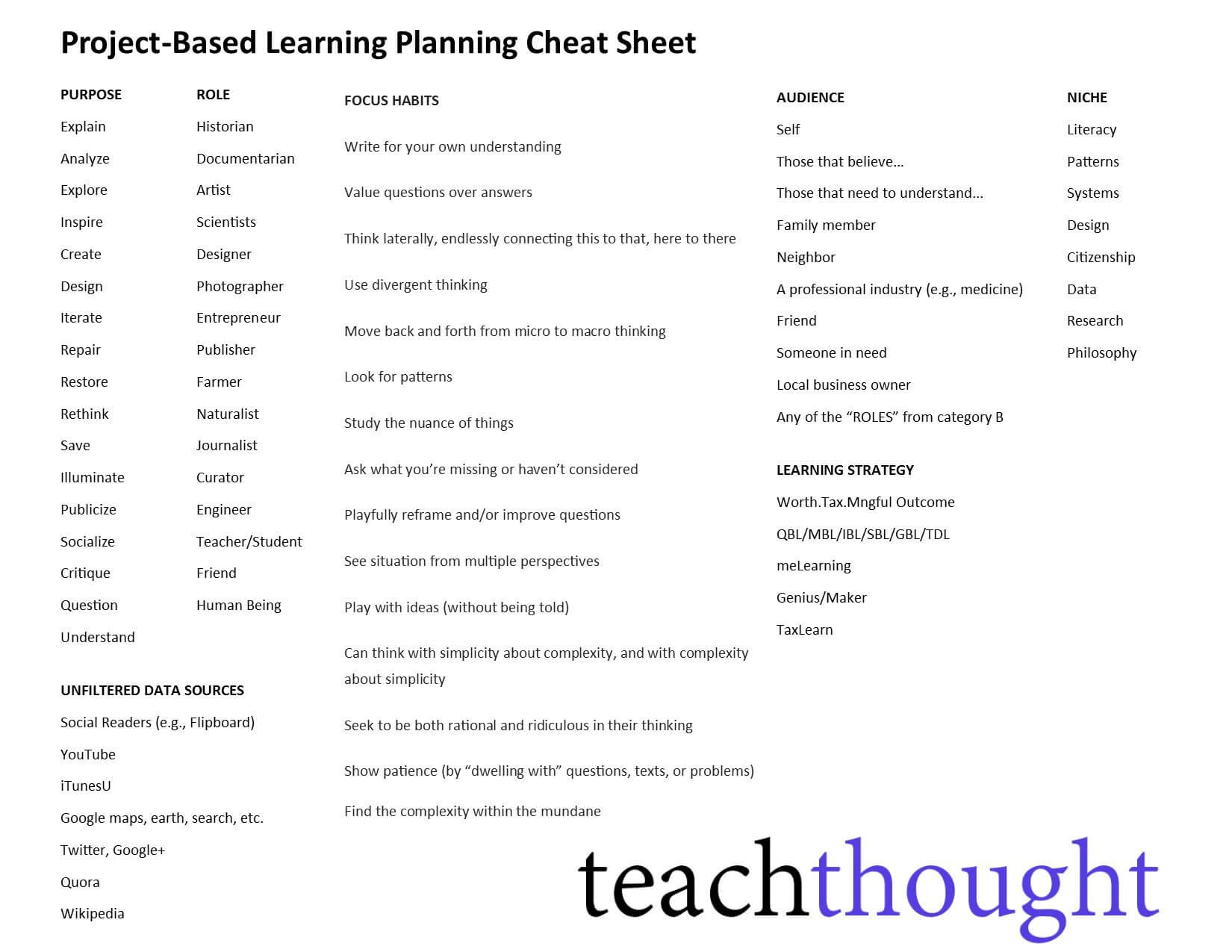
The function of this image is to help get your own creative juices going to decide what’s most important when designing authentic PBL units.
A modern teacher has to demonstrate for students not how to solve problems, but why those problems should be solved.

Connecting old knowledge helps students extend their established, stored memory patterns and categories to incorporate the new insights.
It was because I changed my policy on zeroes mid-year that this student was afforded the opportunity to pass when everything looked bleak.
Technology Is Just A Tool by Jennifer Rita Nichols Most educators can agree that the biggest trend in education today has to do with technology integration. As more and more schools find ways to use technology in the classroom and across subject areas, teachers are trying multitudes of techniques for effective integration that promotes student…
Stress cuts off students’ access to higher-level networks of higher-order thinking, logic, creative problem solving, and analytical judgment.
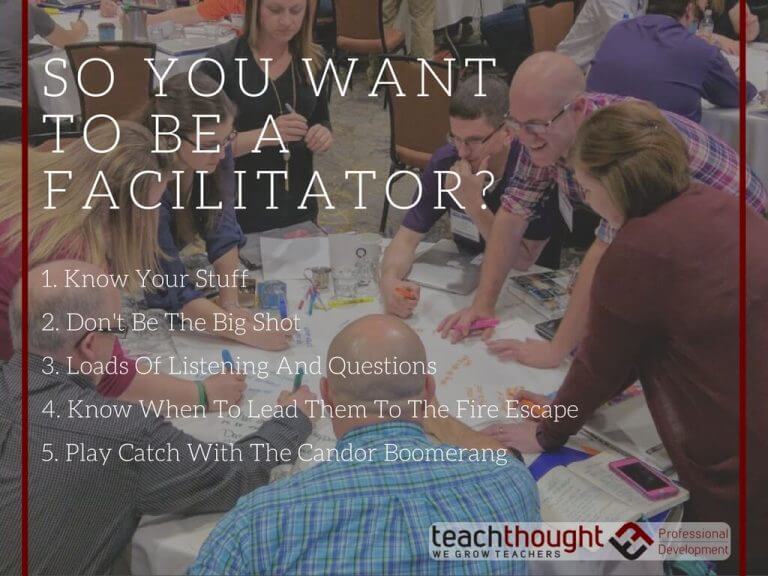
So what makes for a quality facilitator of professional development? It’s complex, but here are a few tips.

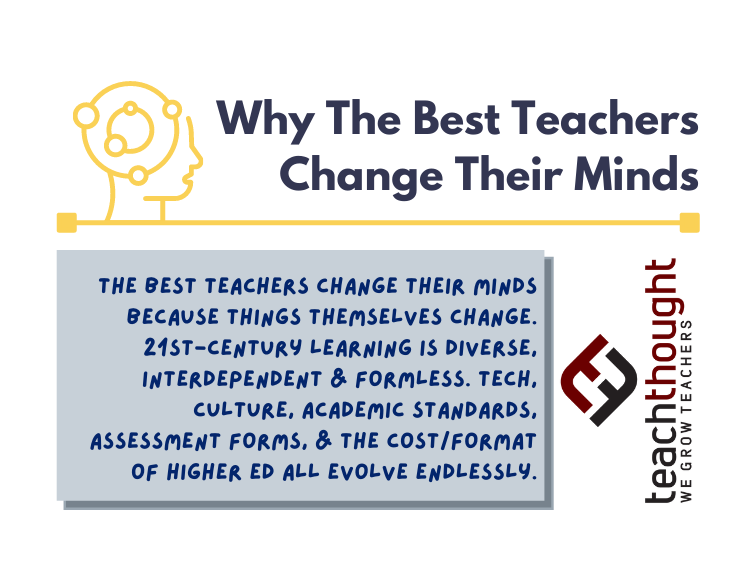
If you’re changing your mind—about inquiry, the ideal lesson template, or the best audiences for project-based learning products—that means you’re growing.
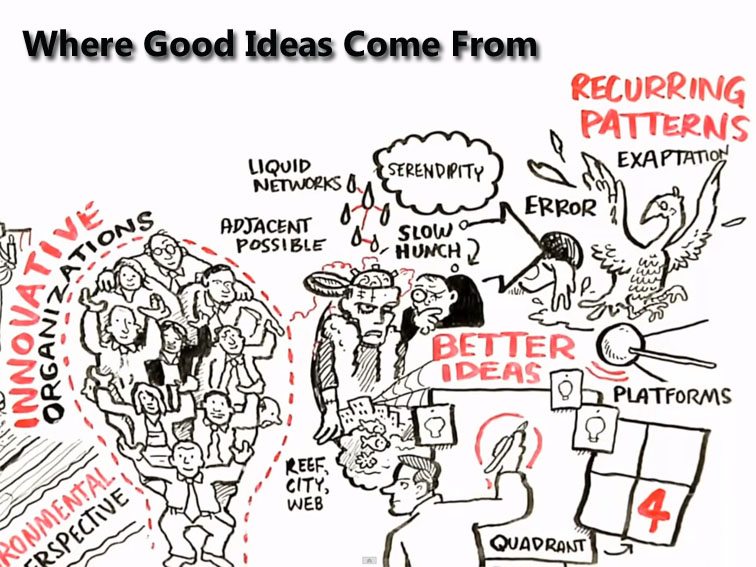
Where do good ideas come from? The source for innovative or creative thinking is as much as mystery as that of curiosity or particular genius.
Technologies influencing eLearning include social learning, video, adaptive algorithms, and microcourses and credentials.