What Is The Purpose Of Assessment?
In a perfect world, all assessment would be formative–an ongoing loop of learning, feedback, revision, and learning again.


In a perfect world, all assessment would be formative–an ongoing loop of learning, feedback, revision, and learning again.

What are some of the most common types of questions for teaching critical thinking? This led to many dozens of answers.

The 40/40/40 rule: What’s important that students understand for the next 40 days, for the next 40 months, for the next 40 years?

The difference between pedagogy, andragogy, and heutagogy has to do with purposes and roles–being taught or teaching yourself.
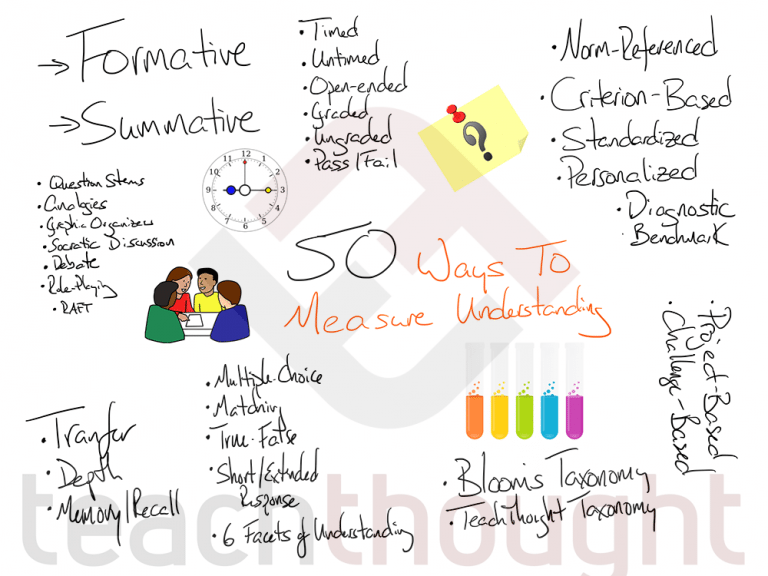
It’s difficult to teach if it’s unclear what students actually understand–and multiple-choice tests aren’t enough. Here are 50 alternatives.

When discussing equity, there are so many convenient phrases but there may be a larger view that we’re missing.

It’s never really over, and rather than maddening, this is indicative of a trend seemingly encouraged by the digital universe we all duck our heads into each day.

I’d be a little disappointed if the most enduring impression of a student’s time in my classroom was a mental image of me.

By deciding what stays & what goes in the near-future classroom, what’s worth understanding & what’s not, teachers have quite a bit of power.

Tone affects how students see themselves and their role in the learning process. The words you use can have a lasting impact.

If schools serve students and students are deeply embedded in the fabric of communities, how can we serve those students without knowing those communities?

In light of the access of modern technology, schools can evolve while simultaneously growing closer to the people they serve.
Sounds leads to words, words to ideas, ideas to perspectives, perspectives to behavioral change, and behavioral change to a better world.

Communities don’t understand teaching and learning? Education doesn’t know what communities really need? This seems like an opportunity.