Why Business Skills Matter In Almost Every Industry
Even creative professionals are often expected to understand budgeting and project coordination.


Even creative professionals are often expected to understand budgeting and project coordination.
Free online crossword puzzles are digital word games where players fill in grids based on clues.
Learn to recognize and value nonverbal student engagement. From gestures to eye gaze, here are 6 ways students participate without speaking to build safety.
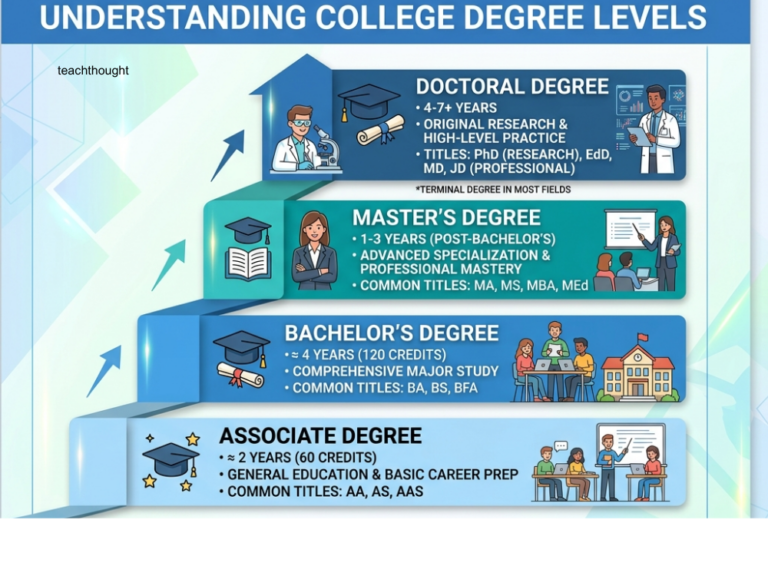
Overview of associate, bachelor’s, master’s, doctoral, and professional degrees: definitions, and typical length/credit requirements.

Most educators who take a post abroad keep financial ties at home.
Textbook rentals are a practical way to access course materials without the cost of ownership.
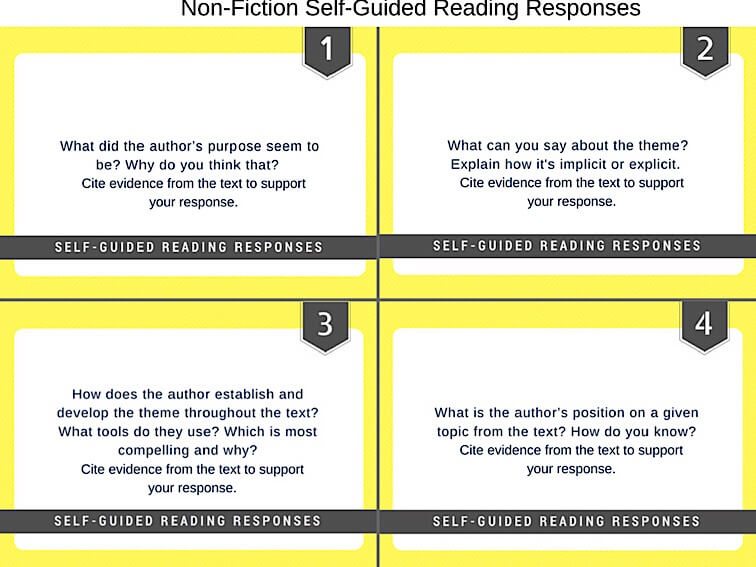
What is the author’s position on a debatable topic from the text? How do you know? What evidence from the text can you cite?

During meaningful conversations, students are forced to be accountable for positions, to listen, and to analyze opposing perspectives & ideas.

One benefit of studying information systems while working is the opportunity to connect coursework with problems you already encounter.
Schools face growing financial demands that extend beyond standard budgets.
The most valuable asset for a new teacher is time spent in the classroom.

PBL is not always about high quality, it’s about evidence.
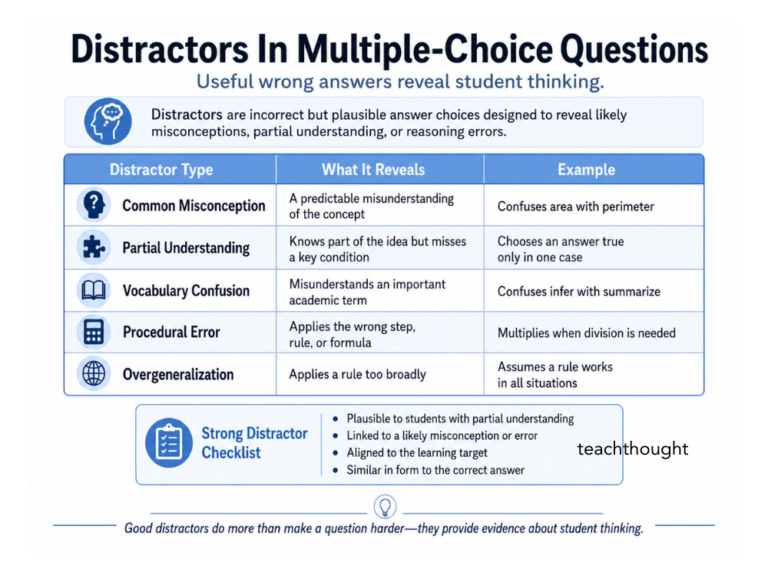
Distractors are the incorrect but plausible answer choices in a multiple-choice question. Strong distractors are written around likely student misconceptions or errors, allowing the teacher to see not only whether a student chose the correct answer, but what kind of misunderstanding may have led them to choose an incorrect one.
From critical thinking to real-world skills, here are 7 reasons every student should try building an app with AI, and why educators should make room for it.