What Educators Get Wrong About Career Readiness
Despite good intentions, the way we approach ‘career readiness’ in education often falls short.


Despite good intentions, the way we approach ‘career readiness’ in education often falls short.
From Khan Academy to Canva, these 25 apps make informal learning practical and engaging—ideal for Genius Hour, self-directed projects, or personal growth.
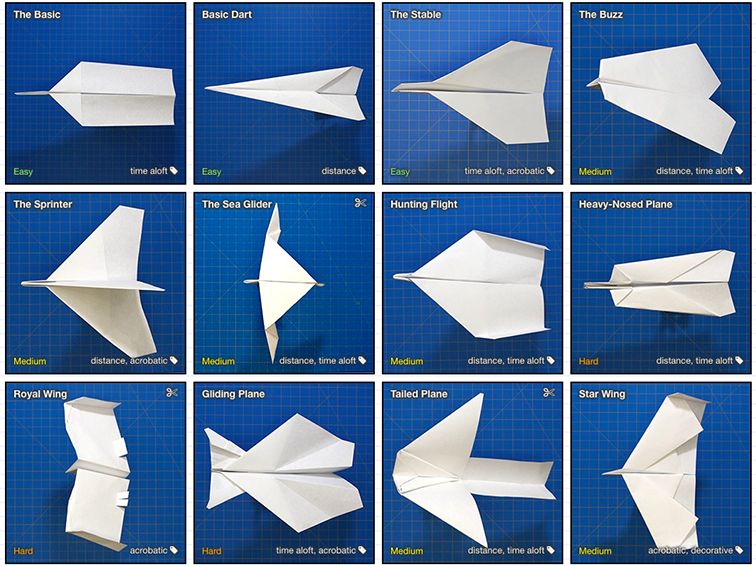
Curated Design Thinking Resources for Educators A Curated List of Design Thinking Resources for Educators Educators and students at all levels are using design thinking to create solutions for real-world problems. Whether you’re new to the concept or looking for fresh ideas, this updated and curated list features high-quality resources that are free, low-cost, or…
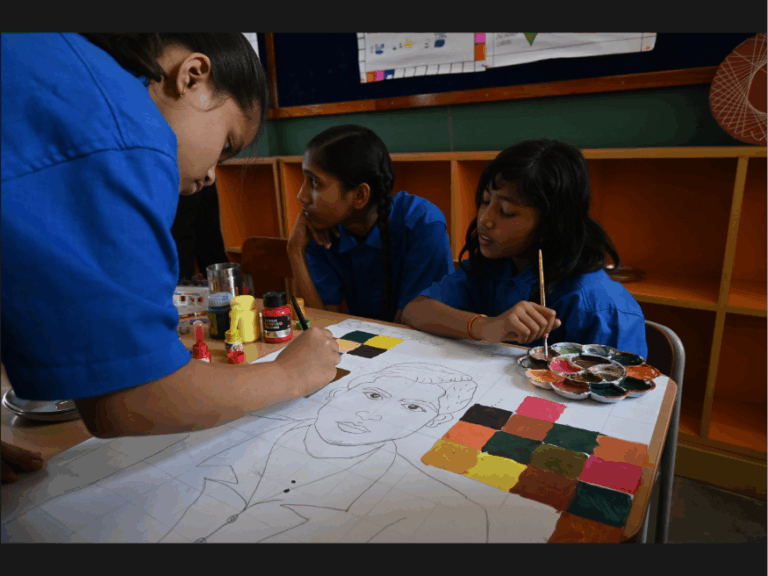
Simple resources from NASA, NOAA, and the Smithsonian Science Education Center.
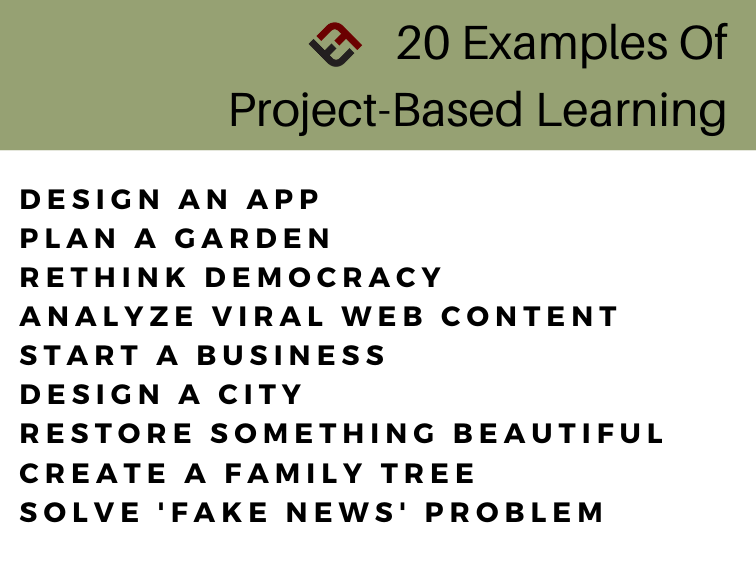
From reducing environmental damage to imagining new forms of government, here are 20 examples of project-based learning.
TeachThought Accessibility Statement TeachThought is committed to making its website, resources, and digital learning materials accessible to as many users as possible, including people with disabilities. Our accessibility goal: TeachThought aims to conform to the Web Content Accessibility Guidelines WCAG 2.1 Level AA and is working to improve alignment with WCAG 2.2 where practical. Accessibility…
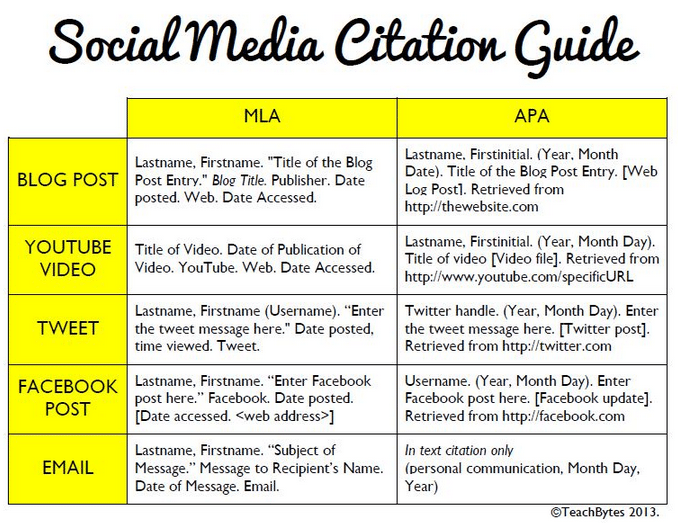
Citing social media in scholary writing? For twitter: @Username. “Full text of tweet.” Twitter, Day month year posted, time posted, URL.
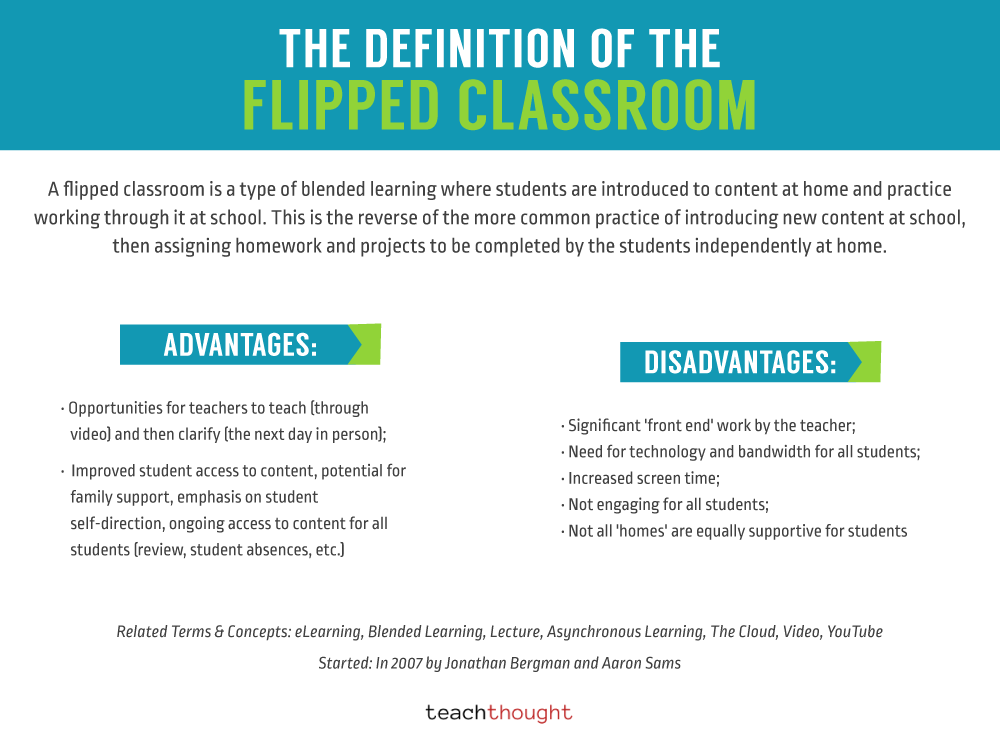
A flipped classroom has students review new material at home and use class time to practice with teacher support.

Social media stalking is repeated, unwanted monitoring of someone’s posts, messages, or activity that causes discomfort or fear and may escalate to harassment.
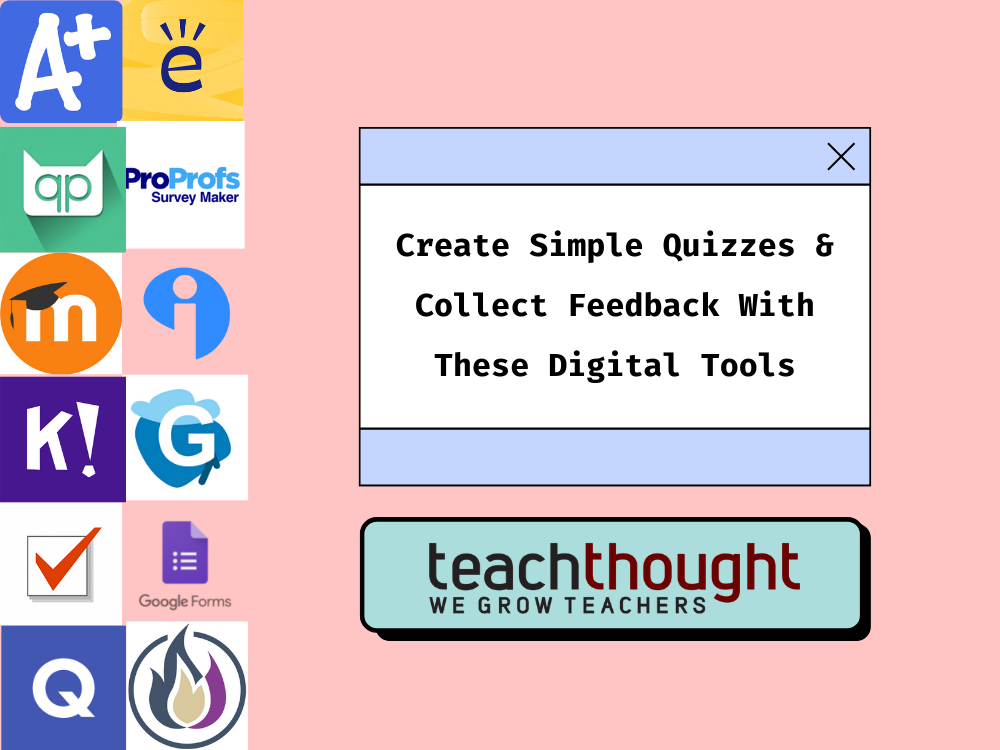
These sites, tools, and apps can save teachers time by allowing them to create simple quizzes and collect feedback from students.
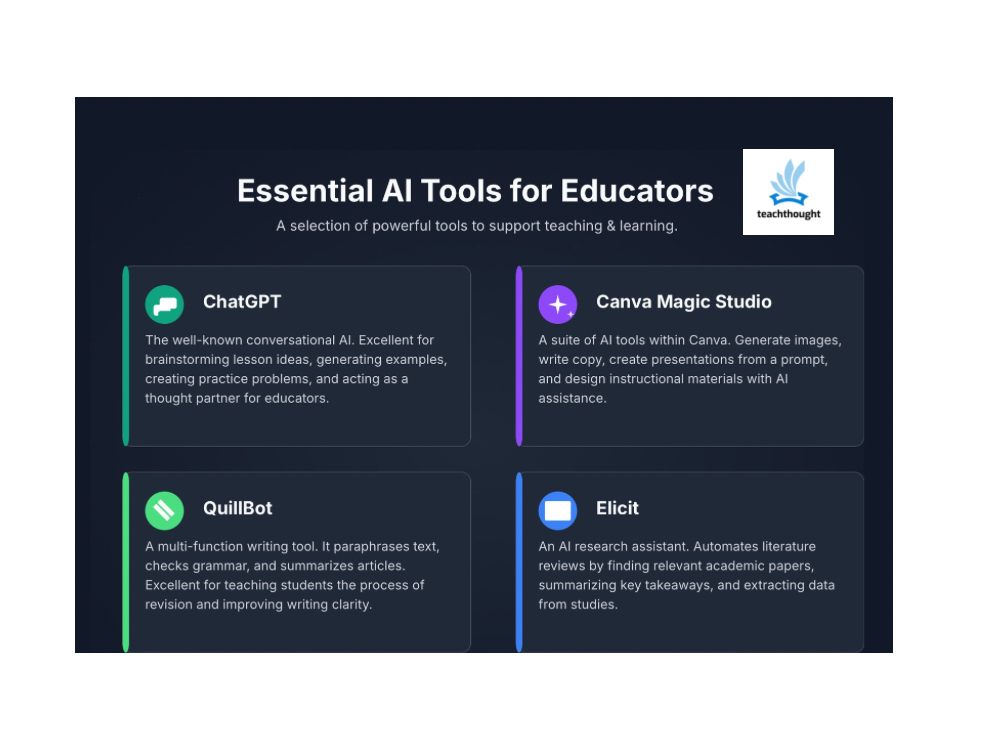
From Afforai to Litmaps to ChatGPT, here are 26 free tools that support research, writing, and teaching for K–12 and higher ed educators and students.
AI in Education Dictionary – AI in Education AI in Education Core terms related to artificial intelligence and its role in teaching, learning, and educational technology. 1. Artificial Intelligence (AI) Definition: A field of computer science focused on creating systems capable of performing tasks that typically require human intelligence, such as decision-making, pattern recognition, and…
![20 Ways To Use QR Codes In Education [Updated]](https://www.teachthought.com/wp-content/uploads/2025/11/TT-FI-PlaceHolder-768x576.png)
1. Quick Access to Rubrics: Place a QR on the assignment sheet or wall that opens the scoring guide.

One student engagement strategy is to offer diverse pathways through content–pathways students would have to ‘unlock’ to progress.